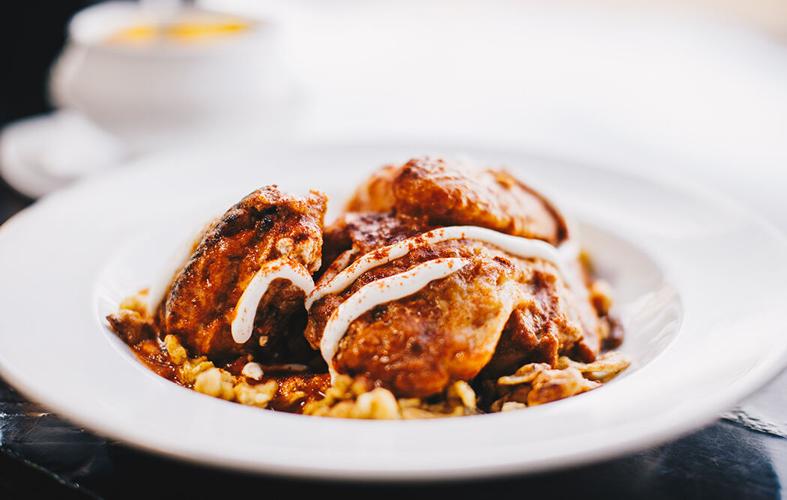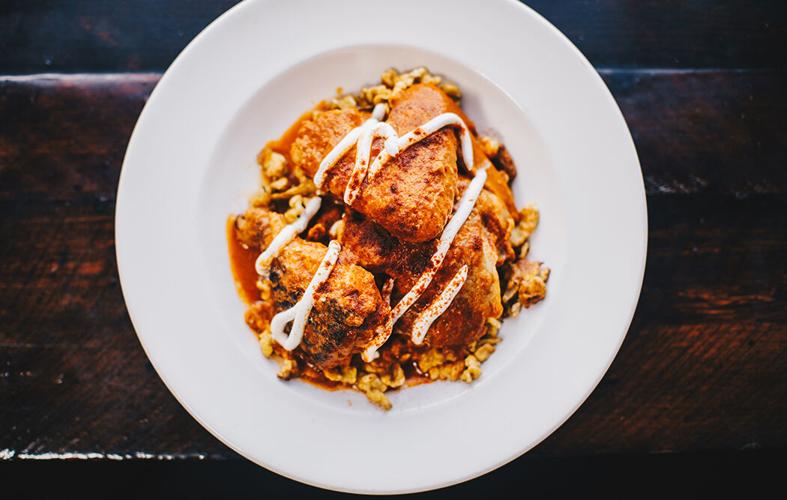

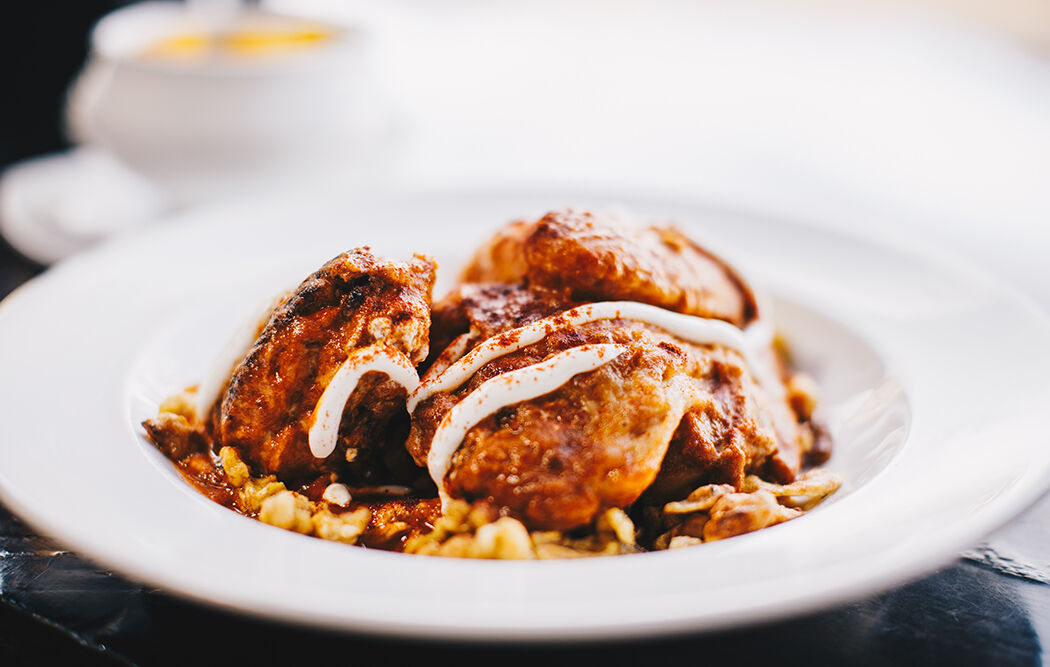
Many of the specials at The Black Sheep reflect chef Steven Gedra’s Hungarian ancestry. This chicken paprikash, a menu staple, does as well – but through the lens of his American-born Hungarian grandmother. Like many families, she adapted recipes to consider the availability of ingredients once they immigrated to the U.S.
What sets this ‘kash apart from others? The Black Sheep’s strict adherence to using local ingredients, including whole chickens.
“Buying and parting a whole locally raised chicken may seem foreign to some, but it’s a gamechanger,” Steve notes.
Buying chicken from a farmer adds incredible flavor to any dish. When measured against supermarket chicken, local poultry is raised in better conditions and fed a varied and vitamin-rich diet, which translates to bolder flavor on the table.
Using a whole bird also allows the cook to make stock and render chicken fat – two techniques that amp flavor and nutrients. Steve suggests making stock from the back of the chicken and rendering the skin from its neck to create the fat needed to make and brown the dumplings.
The Black Sheep utilizes Erba Verde Farms’ Freedom Ranger chickens for the restaurant’s paprikash, but it often uses poultry from Nuhn Family Farm and Plato Dale Farm as well.
Know your paprika
Hungarian paprika is made from dried peppers ground to a fine powder. It’s available in various heat levels; this recipe calls for mild (or sweet) paprika. Since it’s the focus of this recipe, avoid using a generic brand paprika or a jar that’s been in your cupboard for some time. Szeged and Bende are popular and easy-to-find brands.
Substitutions
If piquillo peppers aren’t available or you prefer to add fresh vegetables to the dish, substitute two diced red bell peppers.
Time or effort in short supply? Buy a box of dried spaetzle, nokedli or even haluski at your local supermarket. Cook it to the package’s instructions, transferring it to a skillet to brown, as outlined in Step 6.
Don’t allow the lack of a spaetzle maker to keep you from recreating this recipe at home. Several hacks are easily found online – look for one using everyday home kitchen tools like a slotted spoon or colander.
Noodle this
The Gedras have little use for single-task gadgets, but they endorse an inexpensive spaetzle maker as a tool home cooks should consider. Once familiar with the ease of the recipe and tool, these adorable and delicious dumplings are a welcome addition to chicken soup or a replacement for egg noodles in goulash.
Browned in a skillet and tossed with sautéed spring vegetables, spaetzle serves as a side dish at dinner. When paired with eggs at breakfast, browned spaetzle acts as a stand in for hash browns. There are also many recipes for seasoned or spiced spaetzle and nokedli worth exploring.
Grandma’s Chicken Paprikash

Serves 4
Chicken
- 1 whole, bone-in local chicken, cut into 8 pieces – you can always ask your butcher for help with this!
- 2 cups all-purpose flour
- 1 tbsp. Hungarian paprika (mild/sweet)
- 1 tsp. onion powder
- 1 tsp. garlic powder
- 2 tsp. salt
- 1 tsp. pepper
- Neutral oil, for browning
- 1 cup sour cream
Sauce
- ¼ lb. slab or thick-cut bacon, diced
- 1 white onion, diced
- 1 can piquillo peppers, diced (or two red bell peppers)
- 4 cloves garlic, chopped
- 1 tsp. tomato paste
- ¼ cup Hungarian paprika (mild/sweet)
- 16 oz. chicken stock
- ¼ cup sour cream
- Salt and pepper, to taste
Nokedli
- 1 egg
- 1 tsp. mustard powder
- 1 oz. melted butter or rendered chicken fat
- ½ cup all-purpose flour
- 1 oz. water or chicken stock
- Salt and pepper, to taste
- 1 oz. cold butter
- Neutral oil, for browning and tossing
Garnish: Pickled vegetables
Step 1
Heat the oven to 300°F. Pat the chicken dry and salt thoroughly. In a large bowl with ample room to coat the chicken pieces, combine the flour, paprika, onion powder, garlic powder, salt and pepper. Toss the chicken in the mixture until evenly coated. Set aside, allowing the flour to hydrate.
Step 2
Start the sauce by warming a dutch oven or large sauce pot over medium heat. When the pan is hot, add the bacon, onion, garlic, piquillo peppers and a sprinkle of salt, cooking until the onion softens. Mix in the tomato paste and cook for a minute or two until it warms through. Add the stock, bring to a simmer and cook for 10 minutes.
Add the sour cream and mix until blended. Season with salt and pepper to taste before transferring the sauce to a 9x13-inch casserole dish to cool.
Step 3
Prepare the nokedli. In a large mixing bowl, whip the egg with water/stock, mustard powder, melted butter/chicken fat, salt and pepper. Add the flour and mix the dough with a wooden spoon until it comes together and illustrates some elasticity. Pat the dough into a ball and wrap it in plastic film before setting it aside to rest for 15 minutes.
Step 4
Set up a sheet pan lined with paper towels near the stovetop. Heat a large skillet on the stove. Once it’s hot, add neutral oil to the pan. Using tongs, sear the chicken in batches. This creates a crisp crust – but is not intended to cook the chicken through to the bone. Once the pieces are crisp and golden brown, place the chicken on the lined sheet pan to drain excess oil.
When all eight pieces are done, transfer to the casserole dish, laying them onto the sauce in a single layer. Cover the casserole with foil, tenting it slightly with a fold in the middle so it’s doesn’t stick to the chicken. Place the dish in the oven on the middle rack and bake for 30-40 minutes.
Step 5
While the chicken is in the oven, finish making the nokedli. Boil a pot of salted water. Place a sheet pan near the stove top. When the water is at a rolling boil, place a nokedli (or spaetzle) maker over the pot. In batches, drop dough through the spaetzle maker into the water and cook 2 to 3 minutes. Use a spider or mesh strainer, remove the nokedli, pouring off excess water before transferring to the sheet pan. As the dumplings are moved to the sheet pan, drizzle them with a small amount of oil and toss gently to prevent sticking.
Step 6
Once all the nokedli are made, heat a large skillet over medium heat. Brown the cold butter. Reduce heat enough that the butter doesn’t burn while evenly browning the dumplings in the pan. Once browned, hold the dumplings in a large serving dish and cover to keep warm.
Step 7
When an internal thermometer inserted in the meaty part of the chicken reads 155°F remove the casserole from the oven. Allow the chicken to rest a few minutes. This uses the chicken’s residual heat to bring it to 165°F while retaining its internal moisture. Place the chicken on the nokedli. Spoon the sauce over the chicken and noodles.
Garnish with sour cream and serve with a side of cold pickled beets or veggies from Barrel and Brine.
Dig In, Buffalo is presented by Orville's
Win a curated gift basket inspired by Dig In, Buffalo! valued at $250 –plus a $250 gift card to Orville’s! Enter now »