
More than a year of social distancing combined with two extended stay-at-home orders had effects physical, mental and financial.
One reality for many was breaking good habits surrounding fitness and food. While there were the success stories of people eating healthier or turning to home fitness routines to work out stress, for many people, Covid-19 meant a more sedentary, less healthy lifestyle.

After a pandemic that brought so many shared experiences to a halt, Independent Health is wo…
From Covid-19 came the “Covid 15” – as in 15 extra pounds that weren’t there before.
“Everyone was asked to do whatever they needed to, to survive,” said Sue Jandzinski, recounting the last year-plus of work as a local hospital director. “We have this saying, ‘All other duties as assigned.’ It was stressful because you had your work life and your home life, and they were melding together.”
According to Jandzinski, one of the “downfalls” of this mentality was her developing anxiety during the pandemic. She mitigated the symptoms with anxiety medication, but by her doctor’s appointment in spring 2021, she was ready to “get to the bottom of it,” she said.
People are also reading…
Prompted by her primary doctor to begin weaning off the medication and develop coping mechanisms for feelings of anxiety, Jandzinski immediately thought: “exercise,” she said.
But the effects of her regular routine spanned further than anticipated.
When Jandzinski started a regular fitness routine, she not only was able to adjust to life without the medication and mitigate her anxiety, but she also developed lifestyle habits that changed her in other ways, she said.
“During the pandemic, I was sedentary. I was just getting by,” Jandzinski said. “I am an avid walker, so I would walk. But, I was like, ‘I’m 51 years old. I need to do something more than walk.’ And that’s obviously, it’s helping, but wasn’t…So, I decided, that at 51, I am going to own this. This is all me.”
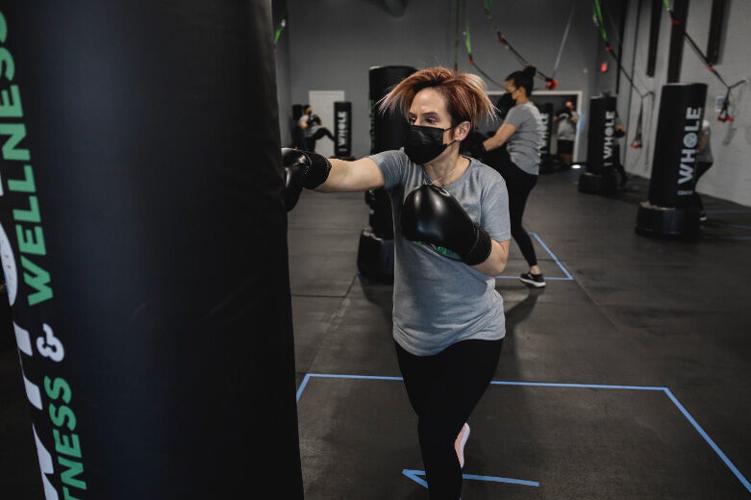
With Kelly Williams’ guidance, owner of WHOLE Fitness & Wellness, Jandzinski works out daily first thing in the morning, feeling that the consistency of the routine clears her mind.
“It has made a huge difference,” Jandzinski said. “I feel better, I think better, kind of grasping at the whole thing. I feel like the moving of your body and the confidence is just kind of uplifting after the last 15, 16 months of what we just went through.”
And she is not alone.
Williams said that Jandzinski is one of many clients who have found solace in a regular fitness routine, noting that it not only physically strengthens muscles that have been unexercised for a year-plus, but also gives a positive overall mentality for navigating post-Covid times.

“A lot of our habits changed, and we’re feeling the effects of the stagnation and are ready for the change,” Williams said. “If it’s just coming back to exercising, we don’t need to overcomplicate it. Because just as easily as it is to lose it, just as easy as that muscle atrophy happens, that muscle gain and that muscle memory also comes back. We remember. Your body remembers.”
In her work at WHOLE Fitness, Williams also emphasized that wellness is a multifaceted process, urging clients to focus on diet, physical activity and mental health to maintain it.
“I think a lot of us, we’re kind of at this battle with our body,” Williams said. “We’re in conflict with our body all the time because we do the 1,200-calorie diets and it doesn’t lose weight, and we start to work out but then something starts to hurt. I want to educate my members to understand that your body is responding in this way because. And usually the ‘because’ is something that’s designed to save their lives.”
8 tips for starting (or maintaining) a healthier lifestyle
Kelly Williams, owner of WHOLE Fitness & Wellness, says the best approach to returning to pre-pandemic shape is a balanced approach. Here are some tips:
Nutrition
1. Eat every meal. Despite dietary culture’s emphasis on cutting calories, Williams stressed that her formula with food is “adding in, rather than taking away,” she said. “The widely accepted way of approaching all of this is we want to take away. ‘I’m not eating this anymore, I’m not having this, I can’t do that.’ But rather than that, think about adding in.”
Williams also said that undereating can actually make it very challenging for one’s body to recover.
2. Drink water. Given that the body is comprised of 70-80% water, rehydrating with fresh, clean water is essential for maintaining wellness, Williams added.
3. Eat the rainbow. Incorporating a variety of colorful vegetables plays a crucial role in health, Williams said. High-nutrient, low-calorie foods will fill the stomach and cells with necessary vitamins and minerals. Her rationale? Each of those different colors contains the different nutrients that you need.
“Your stomach wants to be full. We are biologically programmed to want to feel satiated. That feels comforting and so again, healthy should feel healthy,” Williams said. “For our ancestors, that full belly meant sustenance. That meant life for them.”
But in contrast with ancestral foragers who often had access to a variety of plants and the occasional animal, humans currently have access to accessible, high-calorie foods – sometimes without even leaving the car, Williams chuckled.
The key is to nurture the body and cells with low-calorie, high-nutrient foods, often found by eating a variety of colorful fruits and vegetables, Williams said. She urges to start small: “Start with whatever you’ll eat.”
For instance, if breakfast is eggs with red peppers, follow it up with a green salad with mushrooms and garlic at lunchtime, and summer squash, carrots and eggplant for dinner.
4. Use natural ingredients. Rather than buying a marinade at the store, experiment with using ingredients from the spice cabinet or garden instead, Williams said.
“You are boosting flavor and you are boosting nutrient intake automatically,” Williams said. “Tons of fresh herbs, lemon juice, olive oil, garlic – it goes a long way.”
Exercise
5. Implement cardiovascular movement. A common trend in Williams’ wellness tips, she urges locals not to complicate their workouts.
“What you should be doing is whatever you’re going to do,” Williams said. “Doing it – in any way – is more important than not doing it.”
Anything with multi-muscle movement is a great place to start, Williams said, including biking, walking, jogging or jumping jacks.
“When you can incorporate play into it, it’s a whole other experience,” Williams said, “because now, it’s serving double duty.”
6. Add in some strength training. For the last year-plus, lack of movement has been a prime breeder for muscle atrophy, Williams said.
“We’re sitting on our sofas more, which kind of hug us and hold us,” Williams said. “So we’re not using as much core engagement when we’re doing that.”
Great strength-builders can come from resistance training, body weight exercises, resistance bands, weights – “whatever you’ve got,” Williams said.
While the cardiovascular movements can feel like a purge of energy, strength training is more comparable to an energy build-up, leaving a feeling of muscular strength, Williams said, part of the reason why both halves are needed.
“We’re feeling the effects of too much stillness,” Williams said. “We need balance there.”
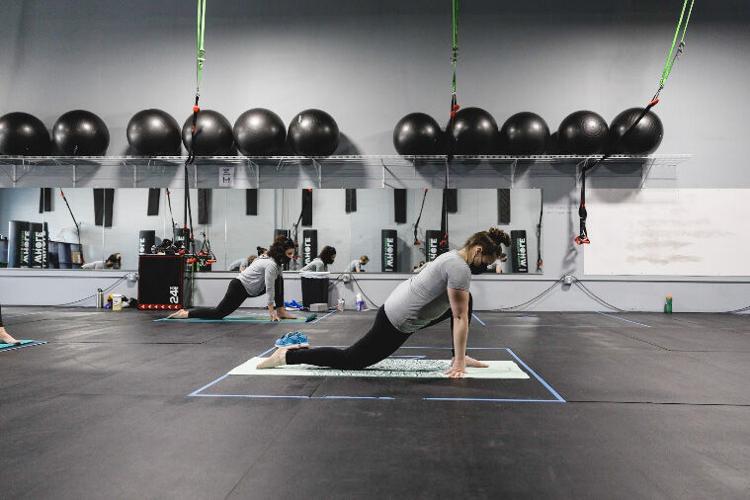
7. Don’t forget to stretch. Usually one of the most neglected aspects of physical fitness, flexibility aids in the range of motion around a joint. And just like cardiovascular fitness and strength training, “If you don’t use it, you lose it,” Williams said.
The most common areas for tightness in the body are hamstrings, hip flexors and pectorals – largely attributed to the fact that people sit more than they should, Williams said, adding that the tightness in these areas can lead to knee pain, breathing issues and lower back pain.
Mental health
8. Find time for joy – and sleep. A tendency to “go, go, go” can often breed a neglect for mental health and the variety of things that come under its umbrella.
With added accessibility to media and technology, Williams said that humans are “multitasking masters.”
“A lot of us are grabbing dinner and consuming it in the car on the way to the kids’ soccer practice, and are we even tasting it?” Williams said. “Because while we’re doing that, we’re also on our phones, and the kids are on their tablets. We’re not engaged with the act of nourishing our body.”
A few decades ago, meals were an “event,” often paired with enjoying the company of those at the table with us, Williams said. Today, Williams urges for a time set aside for intentionality, stillness, quiet time, proper sleep, joy – all facets that go into a healthier mindset.
“One of my goals when I am working – no matter who I’m working with – I want them to understand that they already have all the answers that they need within them,” Williams said. “Things show up in our lives a lot of our time to tell us the direction that we have to move into next, but we’re so busy that we don’t have time.”
Moreover, Williams said it is important to listen to oneself for these clues about personal wellness.
“The pain signal is there because mechanically, there is something going on with your body that we need to honor, and we need to listen to,” she continued. “Just like we would if your kid came to you, or your parent came to you, we wouldn’t push it away; we would stop and listen. And we need to give ourselves that same grace.”