
Most people recover within a few weeks of contracting Covid-19, but for some, their symptoms have lingered for months with no end in sight.
These people are suffering from what is being called Long Covid or long-haulers syndrome.

The lack of structure and in-person learning for adolescents over the past year and a half h…
Dr. Thomas Russo is chief of the Division of Infectious Diseases in the Jacobs School of Medicine and Biomedical Sciences at University at Buffalo and a physician with UBMD Internal Medicine. He also cares for hospitalized patients at the Buffalo VA Medical Center. Russo said when it comes to these long haulers, there remain more questions than answers.
“The sicker you are, the more likely you are to have these symptoms that persist after recovery,” he said. “However, certain individuals who had mild symptoms still have these persistent symptoms. We need to think of it as not just being a virus that affects our respiratory tract. This virus can affect any organ in the body.”
People are also reading…
Russo said some of the most common symptoms experienced by long-haulers include issues with the lungs, such as coughing, shortness of breath and having a difficult time breathing; chest pain, which could be due to heart or lung problems; and aches and pains and in the muscles and joints.
Brain fog and feeling like your thought process isn’t as sharp as usual are also common; as are fatigue, mood issues, anxiety disorder and sleeping issues, and problems with the gastrointestinal tract.
However, by far the most common symptom of Long Covid is the loss of taste or smell, or both in some cases. And sometimes, something that normally might smell or taste good now smells or tastes bad to the sufferer.
“The sense of taste and smell are so important,” Russo said. “Eating is one of life’s pleasures.”
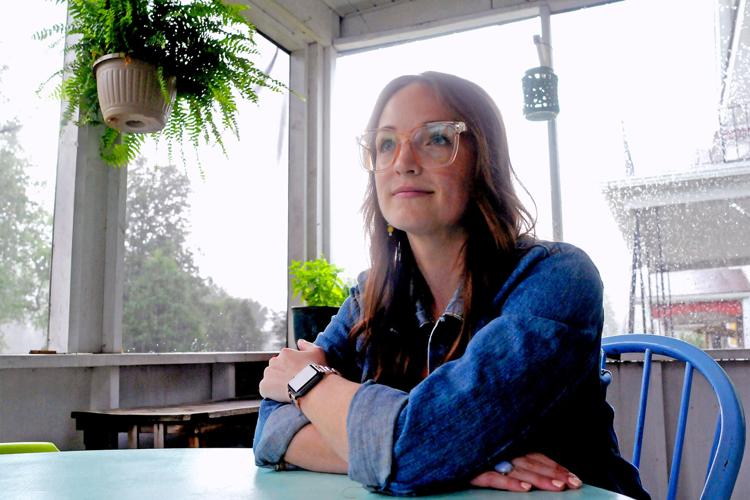
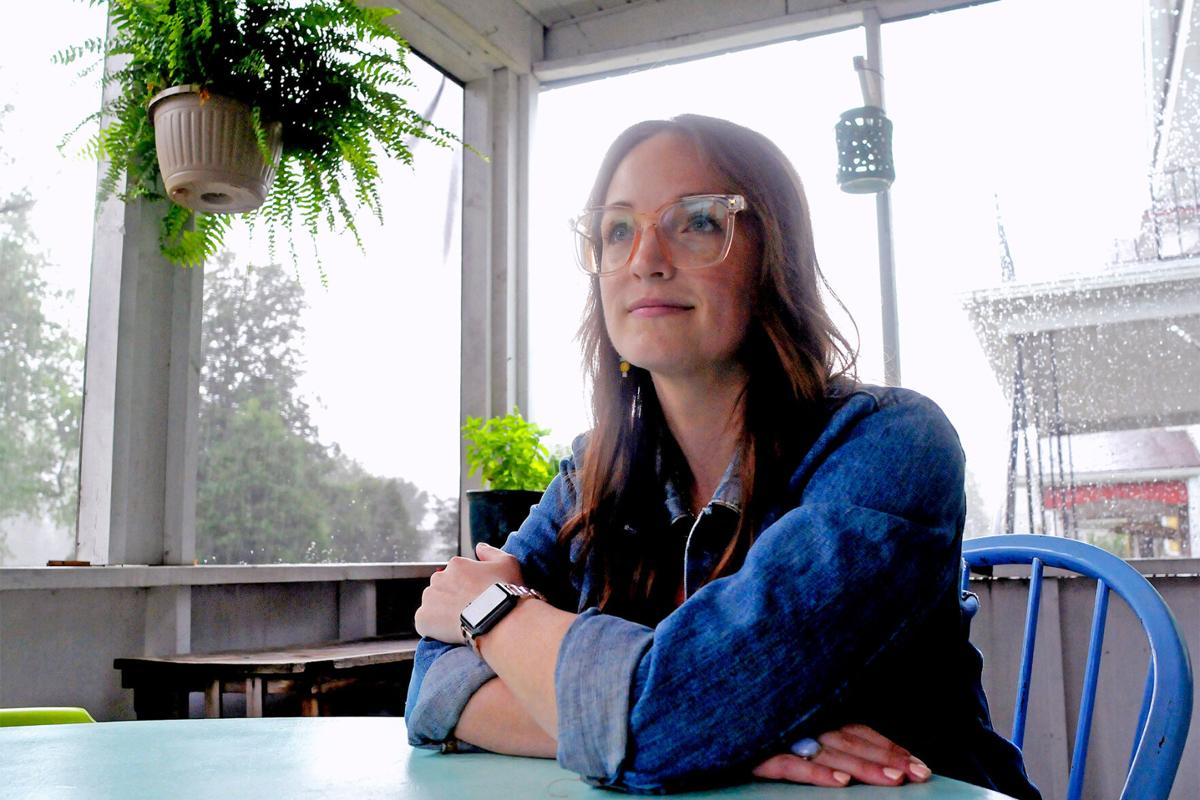
Few know the importance of taste and smell more than Lauren Czora of South Buffalo. Czora has been dealing with symptoms of Long Covid for eight months now.
“I had Covid in the middle of November,” she said. “The symptoms were pretty typical and pretty mild compared to what a lot of people had gone through.”
Czora felt tired and had a bad headache, and within a few days, she noticed she couldn’t taste her dinner one evening.
“It was interesting, because a number of people I’m close with who had Covid at the same time or around the same time, they all lost their sense of smell and taste, and within a week or two, they got it back. For me, though, it wasn’t getting any better. I was just living my life, not smelling or tasting anything.”
Then, Czora woke up one day and discovered that her coffee that she drank every day suddenly tasted bad. After that, her toothpaste began tasting bad and her shampoo had an awful smell.
“It was annoying, and I had no idea what was going on,” she said. “Everything smelled like garbage.”
Czora asked her network if anyone had heard of it or dealt with similar things, and eventually, she was directed to online support groups for people experiencing parosmia and anosmia post-Covid. In those groups, she discovered there were tens of thousands of others already in it who were going through the same things. The distorted sense of smell and taste is called parosmia, while anosmia is used to describe the loss of taste and smell.
“I realized, ‘Oh, my God, I’m not the only one experiencing this,’” she said. “You have this large body of people who make you feel like you’re not alone or crazy. It was a relief to know I’m not the only person, but also scary that 27,000 people all over the world had no idea what was happening to them.”
Russo said doctors are very aware of the problems these persisting symptoms of Long Covid are presenting to patients, and are working to learn more as quickly as possible, but called it a “black box” of mystery.
“This is a huge issue for these Covid Long Haulers,” he said. “We know this is a problem and are also concerned about the long-term consequences we may see decades from now. We know it’s out there and we know a lot of people have these symptoms. We don’t understand what’s causing them. We’re left at this point with symptomatic treatments.”
Beyond symptomatic treatments, Russo said there are a lot of anecdotes out there about ways to help, most of which are harmless. Czora has encountered her share of anecdotal treatments.
“Everyone in those support groups are so desperate to cure themselves or make things that are intolerable more tolerable,” she said. “People are trying things that may be risky or proven not to work out of pure desperation.”
Russo said in terms of managing Long Covid at home, it’s “tough” aside from treating the symptomatic things, and recommended seeing your general physician to rule out anything else that might be mimicking Long Covid but could be an entirely different issue altogether.
“At the end of the day, we’re symptom-chasing here,” he said. “The rest of the diseases of mankind are still ongoing in the age of Covid. It’s critical to make sure it isn’t something else and make sure your doctor does a fair, expansive evaluation.”
Over the past several months that Czora has been battling Long Covid, she has seen her primary care physician a few times, but said other than being treated for a sinus infection and allergies, nothing has been able to help.
“It’s frustrating, but I’m back to how it was, where this is annoying, but I’m grateful to be eating real food again,” she said.

“I’m trying to stay positive and make adjustments that work,” says Lauren Czora.
Even though she can eat real food again, Czora only has a handful of foods that are “safe,” meaning they don’t cause her to smell something rotten.
“I’ve struggled for the last six months to try and figure out what the smell is,” she said. “It’s not like anything I’ve ever experienced…it’s like exhaust from a vehicle mixed with sickly, sweet, rotten fruit.”
But for a monthlong period this spring, even her safe foods weren’t safe.
“It was moderate in the beginning, but it got progressively worse until at the end of April and all through May, all of the safe foods I had didn’t exist anymore,” she said. “The only thing I could eat was rice if it was cool enough, because hot foods smelled and tasted worse.”
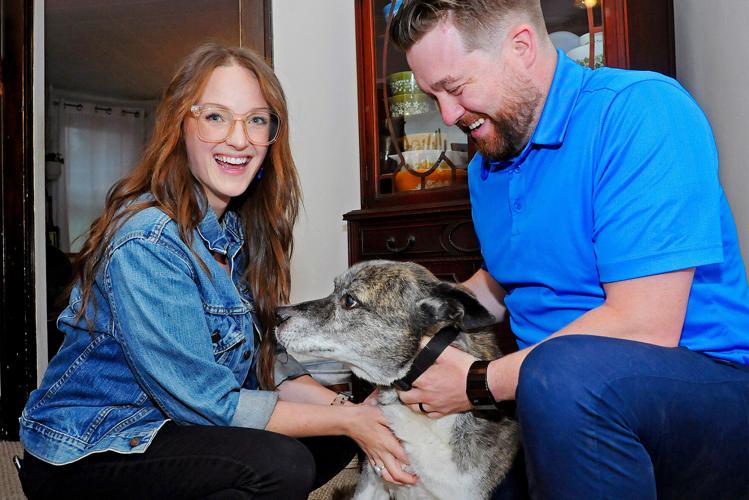
Czora lost a significant amount of weight during that period, and her husband and family were worried.
“I was exhausted,” she said. “I couldn’t even be in the house if my husband was cooking a meal. I got really scared and worried. I lost 25 pounds in six weeks. I’m just now starting to feel like myself again.”
Sadly, feeling like herself still means not being able to smell and taste like normal.
“Everything doesn’t smell good or normal but going through that really horrible part, this season of it I’m in right now is more tolerable,” she said. “People don’t understand. They think, ‘There’s got to be something you can eat,’ and I understand it sounds that simple, but it isn’t.”
Czora said she’s struggled with her mental health throughout this ordeal.
“I’ve felt helpless and hopeless,” she said. “I’m trying to stay positive and make adjustments that work. It’s a lot of trial and error. It’s frustrating to know I can have a good attitude about it, but this is still my reality, and I don’t know how long this will be my reality for.”
The loss is one Czora feels deeply.
“My husband and I, we love to eat good food,” she said. “I love to cook; I have a business on the side where I bake cakes. My sense of smell and taste are so integral. I miss wine. I miss good food. I have a wish list of foods I’m going to work my way down when this gets better.”
While it’s not completely uncommon for symptoms to persist over time with other diseases, Russo said data suggests post-Covid symptoms seem to be occurring at a higher rate compared to other types viruses.
“We’re on a learning curve here; we’re only 18 months into this pandemic,” he said. “This is why we need to develop cohorts of people and follow them out and study these individuals over time.”
Despite the unknown, Russo said it’s important for Long Covid sufferers to know that it is being taken seriously. The Centers for Disease Control and the National Institutes of Health are working together to figure out the long-term effects of long-haulers syndrome and how to deal with them.
“We appreciate we have a problem with a huge knowledge gap,” Russo said. “This is impacting so many people. Even though unfortunately we don’t have all the answers, treatments and solutions, this is something that’s being actively studied.”
Earlier this year, the NIH announced a $1.15 billion investment to study Long Covid over four years, which is good news for people like Czora, who think there needs to be more awareness.