


BUFFALO, N.Y. — Two University at Buffalo professors are leading a public ecological project in Medina, New York, which will honor the agricultural, cultural and economic history of Western New York.
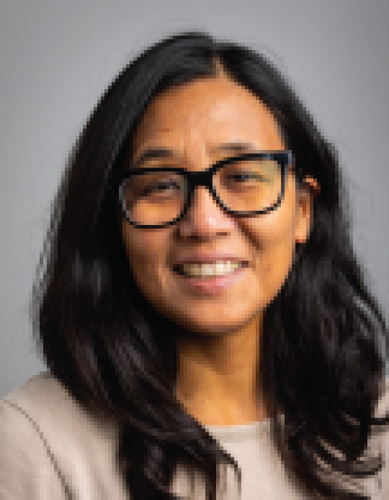
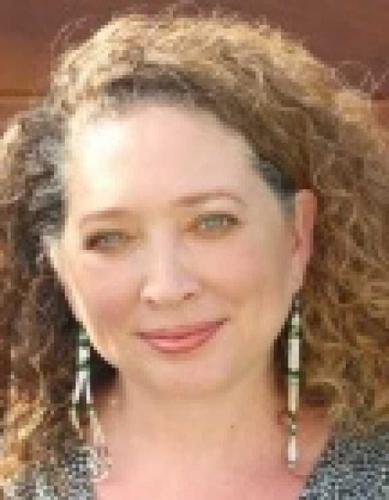
Joyce Hwang, FAIA, professor of architecture in the School of Architecture and Planning, and Mishuana Goeman, PhD, professor and chair of the Department of Indigenous Studies, have received a $195,000 grant from the Andrew W. Mellon Foundation to plan a public space on land owned by New York State.
It will involve a cultural and biological history of the site, particularly connected to apples and other native fruits, and will feature public art in the form of hybrid trees, created by renowned artist Sam Van Aken, MFA, associate professor of art at Syracuse University.
People are also reading…
“The project aims to create a public landscape and living archive that focuses on the crucial role that apples have played in New York’s transformation through a long engagement in Haudenosaunee history, colonization, immigration and commerce,” Hwang says. “As one of the most diverse fruit-growing states, New York has historically become the home to hundreds of apple varieties, many of which have been lost due to industrialization, monoculture farming and changing market demands.”
The project highlights the state’s agricultural history, notes Hwang, who has been developing a series of projects that incorporate wildlife habitats into constructed environments over the past two decades.
“When we began our initial discussion,” Hwang says, “I was thinking that if we’re going to be talking about the state’s agricultural history, we have to include the Department of Indigenous Studies.”
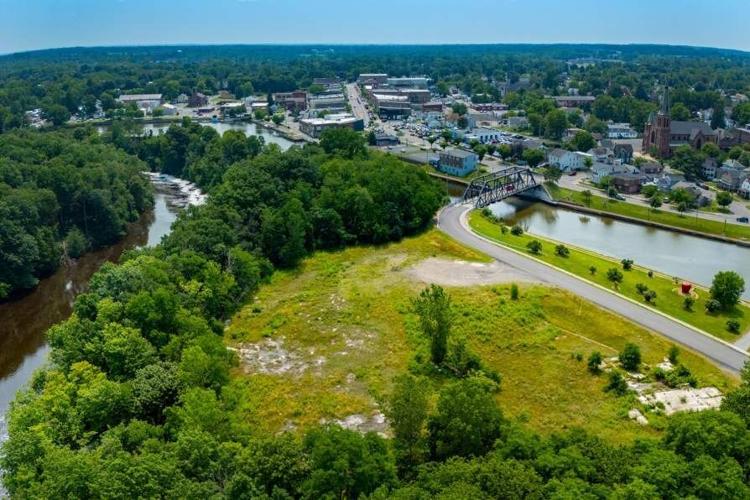
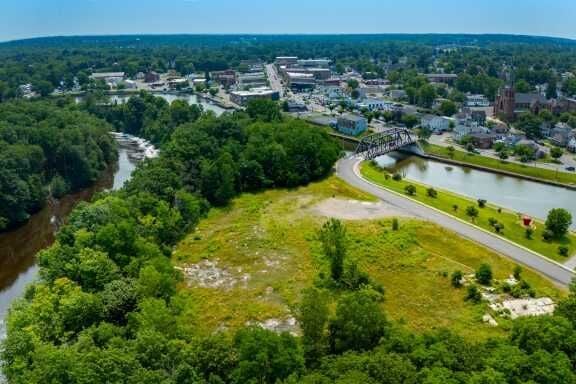
The public landscape will be built on two acres located along the Erie Canal that is close to the Tonawanda Band of Seneca Nation. Once home to a concrete plant, the space is adjacent to a larger capital project that the New York Power Authority (NYPA) is undertaking to renovate the Empire State Trail, adding accessible walkways and bike paths along the canal.
This summer Goeman and Hwang are meeting with community shareholders in Medina, as well as NYPA and the New York State Canal Corporation (NYSCC). Other UB collaborators include Christopher Romano, AIA, assistant professor of architecture, Alissa Ujie Diamond, PhD, assistant professor of urban and regional planning, and Jason Corwin, PhD, clinical assistant professor of Indigenous studies.
Goeman, who has connections through patrilineal descent with Tonawanda Band of Seneca, says this location has so much potential as an important intersection between Medina, which is the widest spot on the Erie Canal, and the reservation.
“I really believe in a project of land solidarity and creating more solidarity practices within Medina by incorporating local Indigenous voices and histories that often are not told in this particular area,” Goeman explains.
In 1779, a military campaign led by Gen. John Sullivan during the American Revolutionary War, burned down all the orchards and corn fields that were attached to the villages of the Haudenosaunee (also known as Iroquois).
As European agricultural practice took root in the following decades, apples became a cornerstone of New York’s economy, with hundreds of apple varieties available by the early 20th century. Industrial practices in more recent years have reduced the number of commercially available varieties to only a few dozen.
The project seeks to address these challenges by serving as a living archive of the state’s rich apple heritage, reintroducing heirloom and antique varieties that once flourished across the region and tracing patterns of migration, settlement, colonialism and biodiversity. One of the project’s goals is to use multigrafting techniques explored by Van Aken, who created the Tree of 40 Fruits. This is a horticultural technique where multiple varieties of fruit are grafted onto a single root system.
“Through conversations and archival research, we aim to compile a historical narrative for the site that can serve as a guiding document for the design of the park’s interpretive elements, such as signage, and selection of plantings and tree species going forward,” Hwang says.
For additional information, the UB team is meeting with representatives from the Buffalo History Museum, the Erie Canal Museum, the Medina Historical Society, the village of Medina and the Tonawanda Reservation Historical Society and preparing an archival narrative to present during a meeting with all the shareholders in the fall.
An enormous part of the work this summer, Hwang says, is analyzing the site itself. When the time comes, the team intends to co-design the space in collaboration with the shareholders in Medina.
“Ultimately, we’re interested in creating a place where everyone can feel welcome,” Hwang says. “I think it’s important that it reflect not just the history of the Erie Canal that most of us know, but also the hidden histories that need to be included.”


