


Much of our understanding of genetic diversity comes from analyzing changes to single base pairs of DNA — like flipping an A to a G, or T to a C. That is because that is all initial DNA sequencing technology could reveal.
But long-read sequencing can characterize much longer pieces of DNA, revealing structural variants that can each affect 50 base pairs or more. In fact, structural variants affect nearly eight times more of the genome overall than single base-pair changes.
“It’s like looking at portions of two books letter by letter with a magnifying glass and thinking they’re the same, but not realizing entire paragraphs have been moved around or duplicated. Older sequencing technology didn’t allow us to easily see that DNA in one individual might be in a completely different place on the chromosome than in another,” says Levi Gray, PhD, a postdoctoral researcher in Krabbenhoft’s lab. “How we define genetic diversity and how we actually measure it is shaped largely by the technology of the day.”
People are also reading…
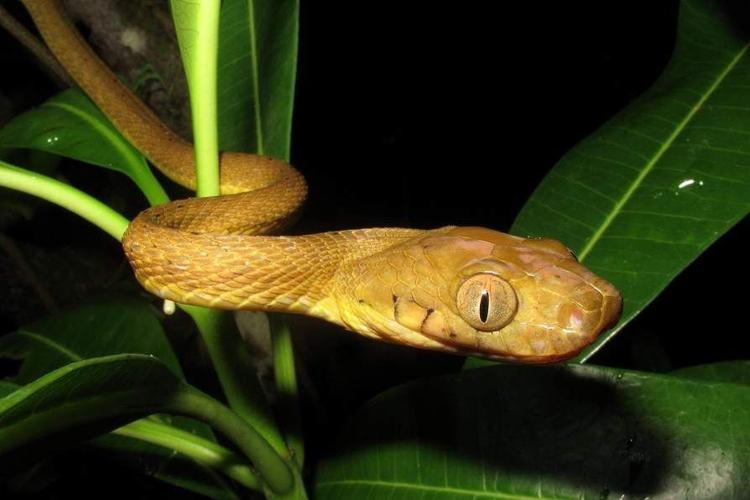
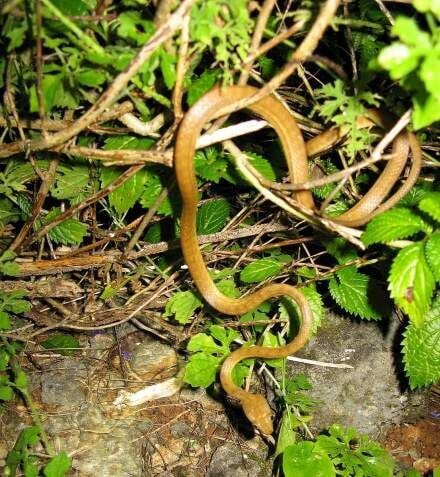
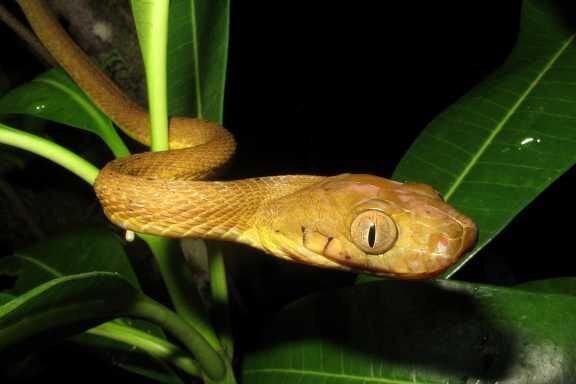
Gray previously studied the brown tree snake problem in Guam while working for the USGS. It was through that collaboration that the researchers received DNA from the USGS Brown Tree Snake Rapid Response Team (RRT), which aims to prevent the spread of the species in the U.S. and its territories.
Analyzing the DNA in Krabbenhoft’s lab, the team found that the brown tree snake genome has over 19,000 structural variants — or roughly 19,000 locations in the genome where segments of DNA differ due to duplications, deletions, or rearrangements.
These variants were not randomly distributed, but enriched in genes involved in immunity and olfaction, or sense of smell.
Brown tree snakes rely heavily on smell — using their forked tongues to taste chemical cues in the air and locate prey. Their enriched diversity in olfactory genes could help explain why brown tree snakes are known to eat other snakes in their native habitats but there is little evidence of them doing so in Guam.
“The snakes’ heightened sense of smell may allow them to recognize one another as something more like siblings — especially given the high levels of inbreeding — than as prey,” Gray says.
It remains unclear whether the snakes’ structural variants arose before or after their introduction to Guam. Large-scale genomic changes typically accumulate over many generations, but some studies suggest that severe population bottlenecks can accelerate the formation of structural variants.
“Is it possible some of this diversity emerged after the invasion? It is, but we would have to sequence snakes from the native populations to know for sure,” Gray says.
Other co-authors include USGS scientists M. Renee Bellinger, PhD, and Melia Nafus, PhD, as well as UB research scientist Brian Foote, postdoctoral researcher Steven Fleck, PhD, as well as PhD students Sarah Chang and Hannah Waterman.


