
In the best of times it can be a challenge to convince seemingly healthy people to visit the doctor for annual wellness screenings, so during the pandemic people might be forgiven if a doctor’s office really was the last place they wanted to be.
But as the threat of Covid-19 subsides thanks to remarkably effective vaccines, getting back into your normal healthcare routine is important.

Annette Colden is about to celebrate 13 years cancer-free – a milestone she marks each year …
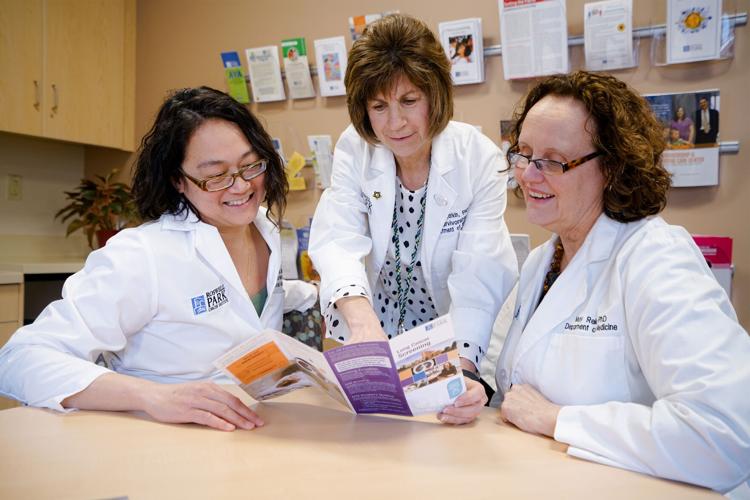
Dr. Diana Wilkins, a professor for the University at Buffalo Jacobs School of Medicine and a family medicine physician, and Dr. Tessa Flores, medical director of cancer screening and survivorship at Roswell Park, explain the importance of these annual checkups.
“The annual health screening, from a physician standpoint, is an opportunity to check in with a patient on a yearly basis,” Wilkins said, “to make sure any preventive health measures for that patient’s age group, and based on any medical conditions that patient may have, are being addressed.”
People are also reading…
During the yearly visit, patients will have a physical exam, discuss immunization updates and receive recommendations for additional screenings based on age or family history.
“With the annual physical exams, we do a height, a weight, a blood pressure, a heart rate, an oxygen saturation, just to see if your vitals are normal, and the complete head to toe, listening to your heart and lungs,” Flores said.
Cancer screenings occur based on age and family history. Generally, cervical cancer screenings begin as early as 21, breast cancer at 40, colon cancer at 45, prostate cancer at 50 and lung screenings for current or past smokers over 50.
“The reason why we recommend screenings is, if we catch it early, we can cure it,” Flores said.
“I think we all have times where our priorities shift, and so establishing a relationship with a physician, at least, is one less barrier to taking care of yourself,” Wilkins said. “For the patient, it’s an opportunity for accountability. An annual health visit is a moment in time where they’re making themselves a priority.”
Annual blood work should also be done to monitor cholesterol and blood sugar. “A lot of patients will feel perfectly healthy and have no idea that their blood pressure is uncontrolled or that they have high cholesterol,” Wilkins said, “because these are two very common problems that really do not present with symptoms until potentially there’s a more critical issue at hand like a heart attack or stroke.”
Creating and maintaining a relationship with your doctor is important so that you can build trust, especially regarding more sensitive aspects of health.

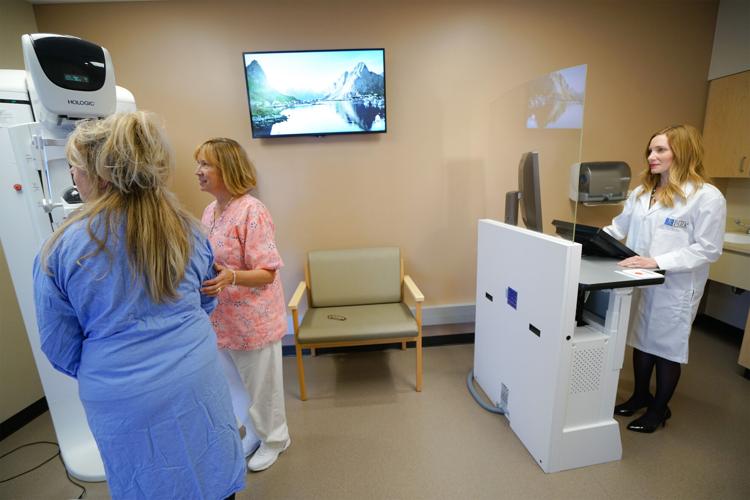
Breast cancer screenings begin at age 40 (earlier for at-risk women) with regular mammograms, which are essential for catching the disease early when treatment outcomes are the best. Roswell Park Comprehensive Cancer Center offers free parking for mammogram screenings.
“As a primary care physician, we really did strongly view continuity as care, and the reason was that so they know you, they know your medical records, they know you as a person and your health, and you build a rapport with these providers,” Dr. Flores said. “If your blood pressure is up or if your weight is up because you’re stress-eating, instead of a medical condition, it could be because your marriage is ending. That’s a very difficult topic and you need some sort of rapport with your provider to be able to divulge that sensitive information.”
“From my perspective, I’m fortunate to have a panel of patients that I’ve built a relationship with,” Dr. Wilkins said. “Hopefully that relationship keeps us connected enough to meet regularly for appointments.”
Wilkins and Flores understand the hesitancy to schedule annual visits, but stress their importance. “I think that’s the biggest thing with people is we don’t want to go into the doctor’s office and get a diagnosis,” Flores said. “That they’re going to have a disease that they didn’t have coming into the doctor’s office.”
“I think there’s a general fear of what could a physician find at an appointment,” Dr. Wilkins said. “The only way to really prioritize your health is by making sure you have a connection with a physician and keeping your appointments.”
Dr. Flores likened caring for our bodies to taking a car for a yearly inspection.
“The reason why we skip these health maintenance exams is that sometimes we’re too busy, we can’t fit it into our schedules, ‘I’m healthy, why do I need to go?’” Flores said. “We take our car for oil changes every 5,000 miles just so that the engine doesn’t go bad, and these healthcare maintenance or annual physical exams are sort of like that.” She joked, “[You get] your tires rotated as prevention but you don’t want to see me every two or three years?”
Dr. Flores also explained that having a preventive perspective on health can help manage complications before they emerge or worsen.
“We should embrace prevention, that whole idea of ‘an ounce of prevention is worth a pound of cure’ is definitely something to be said,” Flores said. “These annual health maintenance visits are actually prevention so we can keep you healthy, and have suggestions on how to maintain your health before problems arise.”
As for people who might feel uneasy going back into a healthcare setting, Wilkins said a doctor’s office is one of the safest places you can visit.
“At a health office, we’re conscious about the fact that we want to keep our patients healthy,” Dr. Wilkins said. “So in accordance with guidance from the state, if you come to a health office, you’re going to be required to continue to wear a mask, as is every provider who’s caring for you during that experience.
Wilkins also expressed the importance of having a “medical home,” where you can go not only when you’re sick, but when you’re healthy, “so that in a situation of crisis or duress, you feel like you have a safe place to go to get cared for.”
Scheduling an annual health screening is important for both your short- and long-term health. In doing so, you develop a relationship with your practitioner, leading to more personalized care and ways for you to take preventative steps towards maintaining your health.