
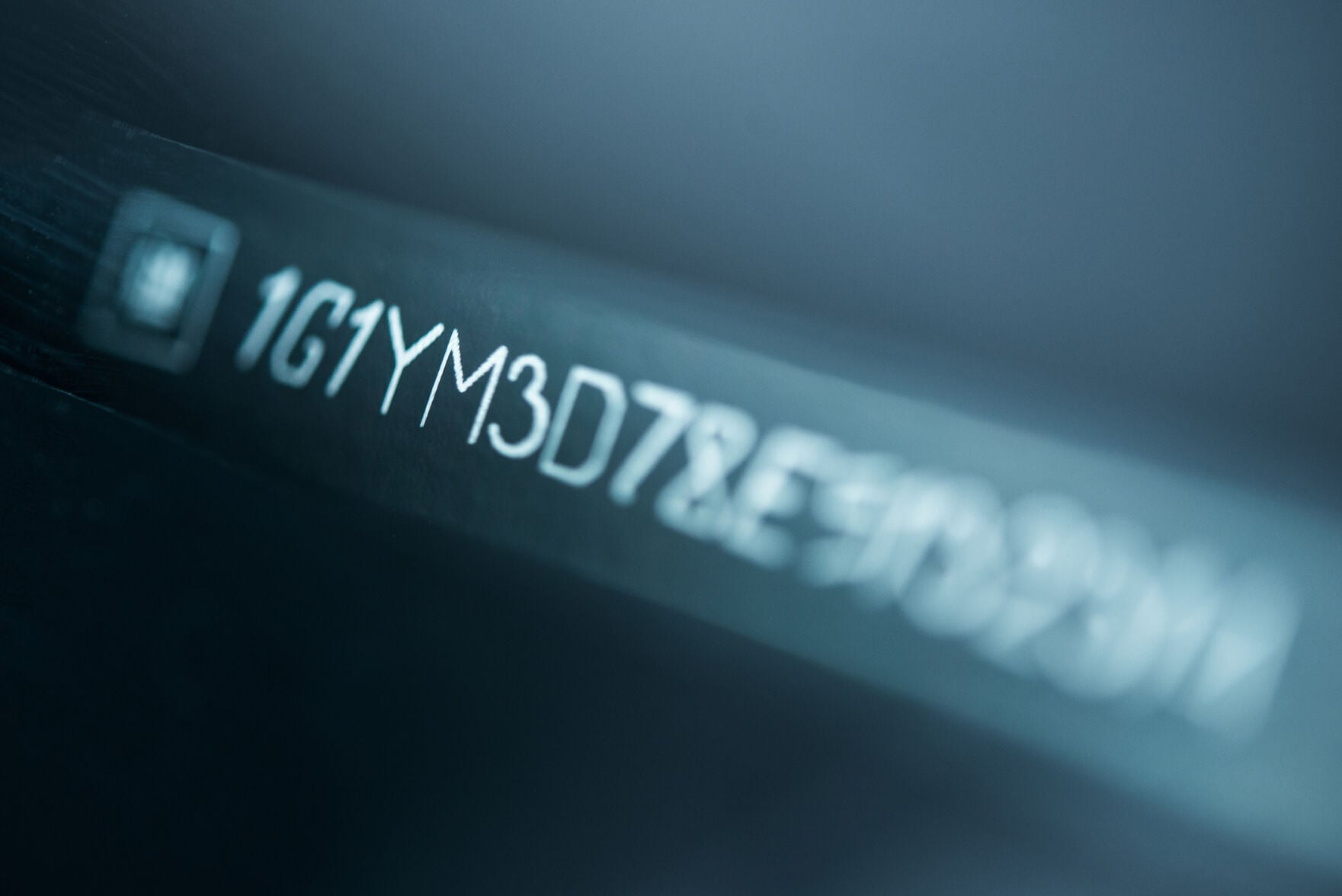
At first glance, a VIN is a bureaucratic tag for the insurer, dealer, and DMV. Look closer, and those 17 characters speak. They reveal the body type, engine, safety systems, and manufacturing details — though some secrets manufacturers prefer to keep hidden.
Vehicle Identification Number Anatomy
Let’s explore all 17 positions without the red tape.
- First character: A geographic key. 1, 4, and 5 usually point to the US; 2 to Canada; 3 to Mexico. J is Japan, K is South Korea, and W is Germany.
- Second character: Points to the manufacturer. For instance, F often appears for Ford, G for General Motors, and T for Toyota.
- Third character: Clarifies vehicle type, division, or category. Together with the first two, it forms the full World Manufacturer Identifier (WMI).
- Fourth character: Opens the Vehicle Descriptor Section (VDS). Here, manufacturers encode the series, platform, body type, seat belts, airbags, or vehicle class.
- Fifth character: Continues the description. It might indicate the body style, restraint system, or trim family.
- Sixth character: Also descriptive, hiding info about the series or equipment package. In practice, positions 4–8 are often read together, like a musical chord.
- Seventh character: Helps distinguish 30-year model-year cycles. This is crucial because year codes repeat (e.g., 'A' could mean 1980 or 2010).
- Eighth character: Often linked to the engine type, especially in American practice (like GM, Ford, and Chrysler).
- Ninth character: The check digit. It reveals nothing about the car but mathematically verifies the VIN's authenticity.
- Tenth character: Shows the model year. Remember: a 2026 model might actually be produced in 2025.
- Eleventh character: Plant code, pointing to the assembly factory. Letters vary wildly between manufacturers, so there is no universal table.
- Twelfth character: Begins the individual identification zone. For low-volume manufacturers, it may additionally help identify the maker.
- Characters 13 through 17: The VIN's tail. Often simply the serial number on the assembly line, though sequences vary by plant, model line, or internal rules.
People are also reading…
What VIN Meaning Really Is
A VIN tells you things not directly stated, like color. A very common search is to find car paint code by VIN. While the 17-character code itself doesn't hold the paint code, dealers and body shops use the VIN to pull the factory build sheet, which lists the exact color, trim, and extra packages.
Conclusion
A VIN is boring only until it saves you money. It helps catch listing mistakes, confirm the year, find exact parts, check recalls, and avoid scams. This string of digits can save tens of thousands of dollars and protect your most valuable assets: your time and nerves.