
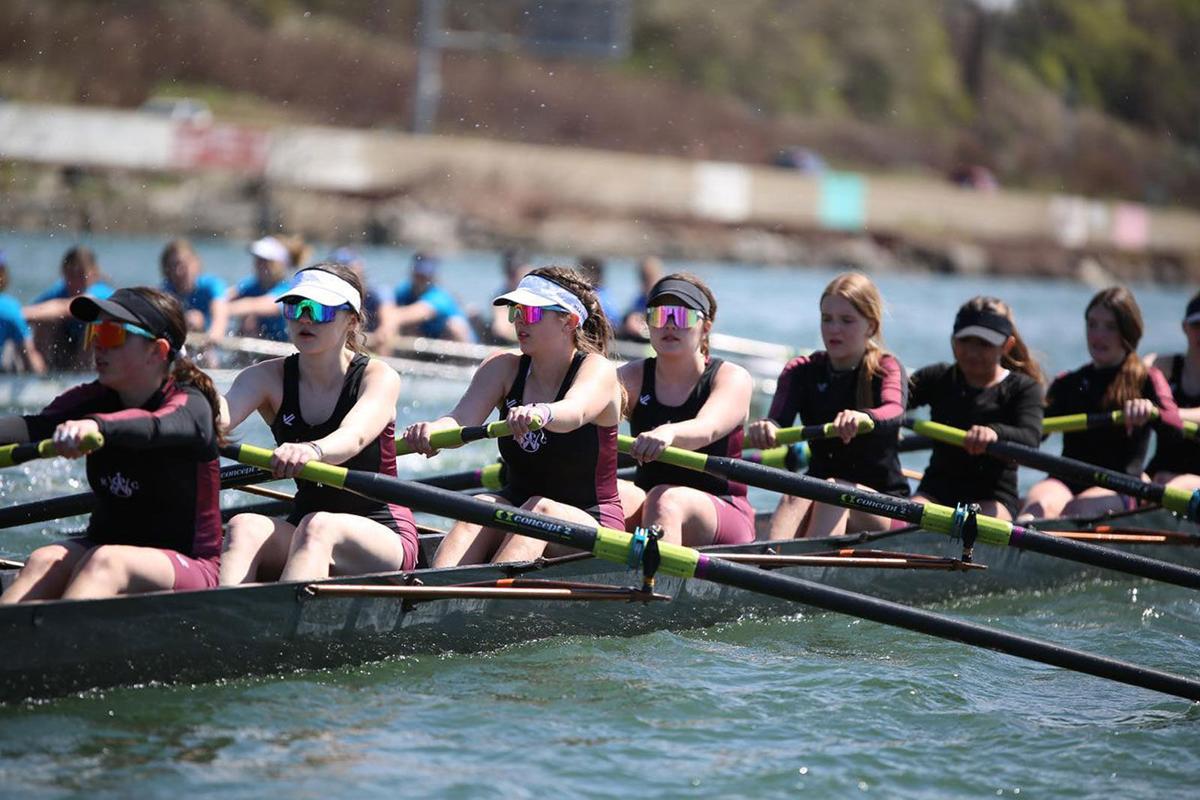
Iris Chase, a 17-year-old senior at Buffalo Academy of the Sacred Heart, first tried her hand at rowing while in middle school. A longtime dancer who also dabbled in several other sports, nothing ever “stuck” for Chase like rowing did.
“I really enjoyed how everybody was literally and figuratively in the same boat,” says Chase. “Everybody’s successes benefit you more than it would in a sport like lacrosse or soccer … because in those sports one person can significantly carry the team.”
Now in her fourth year of rowing competitively for West Side Rowing Club’s high school program, Chase looks forward to attending Bucknell University next fall, where she was recruited to the Division I women’s rowing team.
Chase says she appreciates that to succeed in rowing, “you just put in the work,” and says rowing taught her valuable skills in leadership, determination and time management.
Ian Suchan, director of administration & community engagement at West Side Rowing Club, says many youths who try their programs, like Chase, quickly realize the unique benefits of rowing and the potential for success.
“I’ve had a number of students come through our programs because maybe they didn’t find their perfect fit in another sport; maybe a ball sport wasn’t their thing,” says Suchan. “A lot of these people make a very good transition to rowing. Rowing is unique in that way. It really is directly how much work and effort you put into it.”
West Side Rowing Club has been a part of Buffalo’s rich history of competitive rowing for more than 110 years. Athletes from West Side have competed at every level, including the Olympics and World Championships. The non-profit organization offers youth and adult programs year-round, for those in sixth grade and up.
Kirk Lang, president of West Side Rowing Club, says as the organization looks to grow the sport locally, they’ve prioritized removing barriers and opening rowing to all who want to participate.
The Ralph C. Wilson, Jr. Foundation plays an instrumental role in supporting West Side's efforts to remove those barriers from the sport of rowing and increase access within communities where there previously was none. The club also works with other partners to address potential needs, like transportation costs.
“We’re trying to wear down the notion that this is still an elitist sport,” says Lang. “We’re actively working to build partnerships to ensure anybody can come down, join and participate and be active and compete at any multitude of levels.”
Several local private schools have rowing teams, and for students whose schools don’t offer rowing, West Side Rowing Club has its own competitive novice and varsity high school squads. While many rowers start in middle school with West Side’s summer crew camps – or participate in the fall, winter or spring programs – many join much later and still find success.
“It’s a sport you can do for life,” says Lang.
For middle school or high school students interested in giving rowing a try, Lang and Suchan say the spring programs offer a chance to learn technique on-land, before moving to the water in the warmer months. Visit WSRC.org/youth-rowing for more information.
“What other sport would you be able to take out your own boat that you are in full control of at that age?” says Suchan. “It’s definitely a unique thing to be part of and to try if kids are looking for something outside the norm. It could be a really good fit.”
West Side Rowing Club Youth Program schedule
Sign up at WSRC.org/youth-rowing
Middle School (grades 6-8) Winter Rowing (on-land)
Feb. 6-March 3 (Monday, Wednesday, Friday)
5:15-6:30 p.m.
Middle School Program Open House / Informational Spring Parent Meeting
Feb. 18 at 9 a.m.
Middle School (grades 6-8) Spring Rowing (on-land and water)
March 20-May 27 (Monday, Wednesday, Friday)
5:15-6:30 p.m. (practice time subject to change)