
Alana Humphrey has been fortunate to have good mentors in her life. But it wasn’t until high school that she started making those connections, which typically revolved around soccer.
So when Humphrey now visits her programs as the Independent Health Foundation’s Soccer for Success project coordinator, she’s elated that she can provide kids with opportunities that she didn’t have growing up on the West Side of Buffalo.
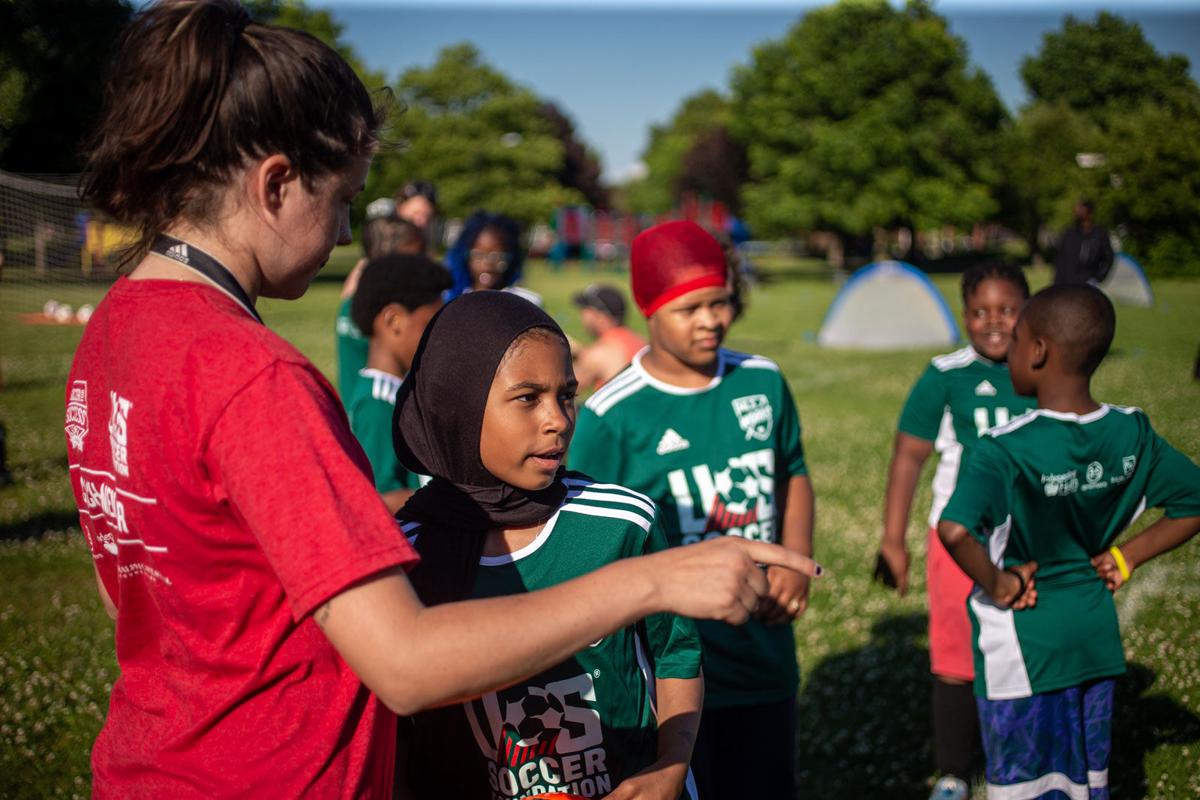
"Literally, this is my heart when I get to see kids having fun, smiling, being with the coaches,” Humphrey says during a recent soccer session held at Public School 45, where she went to elementary school. “I see myself in the children and how these amazing little humans can be even better than I am now. My hope is that each of these children get to do that, plus more.”
Launched in May 2012, Soccer for Success is one of the most popular programs at the Independent Health Foundation, which was founded 30 years ago to enhance the health and wellness of Western New Yorkers. The Soccer for Success program is one of several initiatives that support everything from free wellness screenings to healthy eating.
The after-school youth development program developed by the U.S. Soccer Foundation serves children in grades K-8, encouraging kids in underserved areas to establish healthy habits and develop critical life skills through soccer.
The 10-12 week program takes place in about 20 sites around Western New York – at parks and playgrounds in the summer, and indoors at schools and community centers during the winter – and averages 20-30 students per session. The program has three pillars: peer bonds, sharing power and engaging authentically.
Each week features a new social emotional learning goal (SEL) that pairs the teaching of a soccer skill – passing, shooting, dribbling – with a topic like courage, respect, leadership or confidence. The topic is the focus for the entire week, with coach-mentors introducing the topic the first day, encouraging discussion among the students the second day, and then recapping the topic the third day to finish off the week.
“We empower the players with an opportunity to talk in the circle,” says Jason Quinones, a coach-mentor whose three sons have participated in the program. “We either have them help us through a demonstration, or if they really understand the subject then they can explain and share an experience they’ve had.”
Being able to form trusting connections with coach-mentors is what helped Glorie Ndagano assimilate to the U.S. as a young kid from Rwanda. He credits the Soccer for Success program for helping him learn English, relate to other refugees and be his most authentic self through the comfort of soccer.
It set Ndagano on a path toward a Division I soccer career at Canisius College. Collegiate playing days now complete, he cherishes his opportunity to give back as a coach-mentor.
“We’re not there just to coach and be so serious, but we want to also show them other things in life,” Ndagano says. “I find that very important because a lot of kids come from families where those things are not addressed, and then they come to the outside world and are out of their comfort zone. Every time we sit with them, I see so much growth. They learn, they become friends, and they’re more vocal because we built those relationships.”