
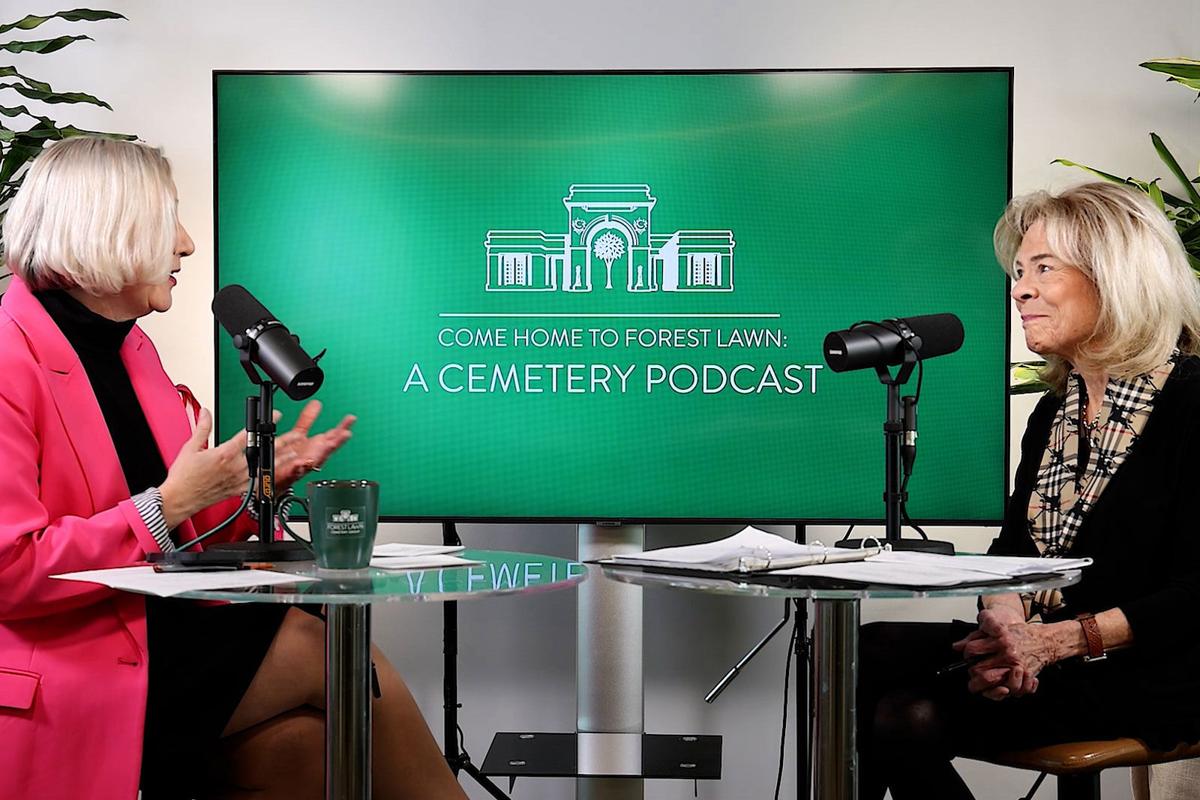
Serving on the Erie County Surrogate Court, Honorable Judge Barbara Howe has seen it all when it comes to planning one’s passing. CEO Julie Snyder asks Judge Howe questions often asked about legacy, filing a will, final arrangements and more. As a Forest Lawn plot owner with years of expertise, Judge Howe walks us through the experience of creating peace of mind for tomorrow.
Barbara Howe, former New York State Surrogate Court judge for Erie County, handled many cases over her time on the bench relating to issues with an estate or affairs of a decedent (someone who recently died). Over 150,000 cases in 14 years, in fact.
“It’s a broad range of jurisdiction over anything that touches the lives of people who have passed away,” she explains. “This is about the path to planning one’s passing.”
Her most important takeaway on this sensitive subject? The value of making choices while you’re still alive and well enough to make them yourself.
“To be thoughtful and caring of your loved ones, it’s so important to handle all these matters ahead of time,” she says. Because it’s going to cause uncertainty, pain and delay for the people you love the most if you leave this in their hands after something happens.”
Howe says as uncomfortable, somber or even depressing as it can feel, she implores people to start thinking about their after-life care.
“Having looked at this from the side of what goes wrong if people do not plan every aspect of their demise,” she says, “It’s so important to try and get motivated to create a will, a health care proxy, a power of attorney and … to make plans for what a person wants to do with their remains, and where they would like their remains to be.”
Forest Lawn Cemetery CEO Julie Snyder notes that a disposition of remains—which is a legal form in which you can detail what you would like to happen to your body after death and who can make arrangements on your behalf—is not the same as a will and shouldn’t be replaced by it.
Sometimes a will isn’t processed until months after burial, meaning your wishes might be missed. An unclear intention on whether you want your cremated remains to be spread or buried or even a complete lack of plan can mean a loved one’s remains can remain in limbo for years.
“The idea of waiting decades for final placement, final memorial, final rest … that word really does carry with it a belief that now you have sort of completed your journey,” says Snyder. “I say that a birth certificate and a burial location are the bookends on a life well-lived.”
Howe recommends people doing their own background research so they can go to a funeral home and cemetery administrator with an informed and comfortable outlook. She took her own advice several years ago, deciding on Forest Lawn as her final resting place. It’s been a favorite spot in the city since she came here 50 years ago.
“One of the first places I enjoyed going to—to do my exercises, to do my walking and fitness—was Forest Lawn, because it’s so park-like, so tranquil,” Howe says. “I felt like I was walking in gardens in England … There was something about this place. It not only was not depressing; I found it peaceful and magical.”
For the whole episode and more information on pre-planning, check out the podcast linked at the beginning of this article.