
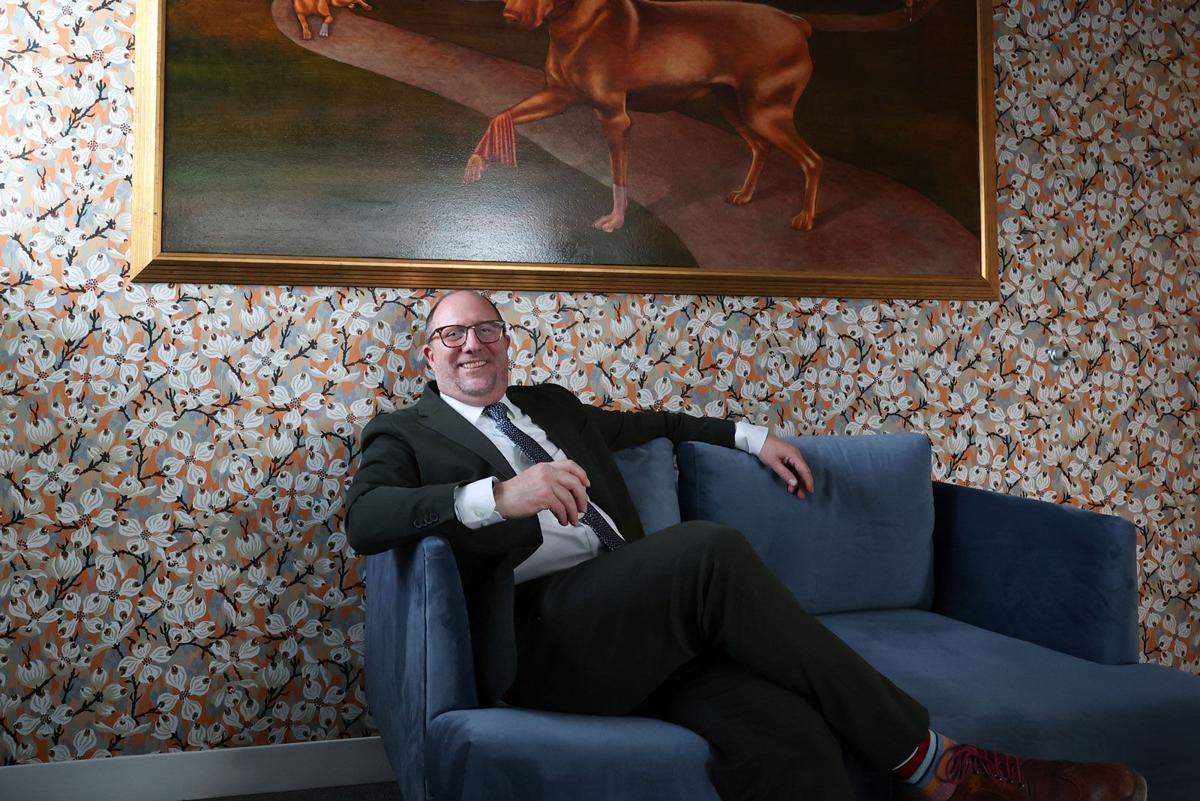
Scott Propeack, executive director, Burchfield Penney Art Center
As a key member of Burchfield Penney for more than 25 years, Scott tirelessly advocates for the arts through collaborations with mission-aligned community organizations.
Scott’s visionary leadership at Burchfield Penney continues to revolutionize the local arts and cultural community while also raising the center’s national profile. As cities like Buffalo become more competitive with one another, Scott believes the region needs to not just be looking in the moment – it needs to be looking 10 steps ahead.
On Buffalo’s unique assets ...
I believe that there’s a mix in Buffalo that doesn’t exist in a lot of cities our size. That mix is rooted in history, the number of colleges and universities bringing talent to town, an incredibly strong multicultural community and board members who are truly invested in the nonprofit organizations that they serve on. It’s not just a status position, but it’s an emotional position, too. Because of that, I think we can collaborate in ways that other cities can’t.
Why leaders need to be involved in the community?
If people want to lead in Buffalo, the people of Buffalo need to be familiar with them. We need to be out and about at not just the functions that are within our own organizations, but the ones that are outside of our networks. For a nonprofit leader to attend a corporate event, or for a corporate leader to start to participate more heavily on boards, it starts with building that familiarity. And once you become familiar with each other, that’s the time to get more engaged in the areas where you think you can have impact.
Your approach to expanding impact?
Instead of trying to do everything yourself internally, look for collaborators around the community. We’re growing programmatically, and none of that could happen without investing in our colleagues in the field. That has strengthened those organizations, and it has also strengthened ours by expanding our educational opportunities in areas of expertise that our staff doesn’t possess. This has been able to draw attention to both organizations without anyone having to feel like they had to be the leader.
Advice for fostering leadership?
I think that one of the biggest problems is that leadership tends to fear that somebody will not do things the same way that they do them. But the reality is, is they shouldn’t do things the same way. Be willing to truly let younger, emerging leaders take on greater responsibilities. Let them make mistakes, let them learn from those mistakes and be there to support them when they make those mistakes. I think that’s crucial.