
Jeffrey Wilkinson’s background is in engineering and he spent 17 years of his career in pharmaceuticals, so when a recruiter came calling about a job at global hospitality and entertainment company Delaware North, he was caught off guard.
But the past seven years with the Buffalo-based company has turned out to be an ideal fit.

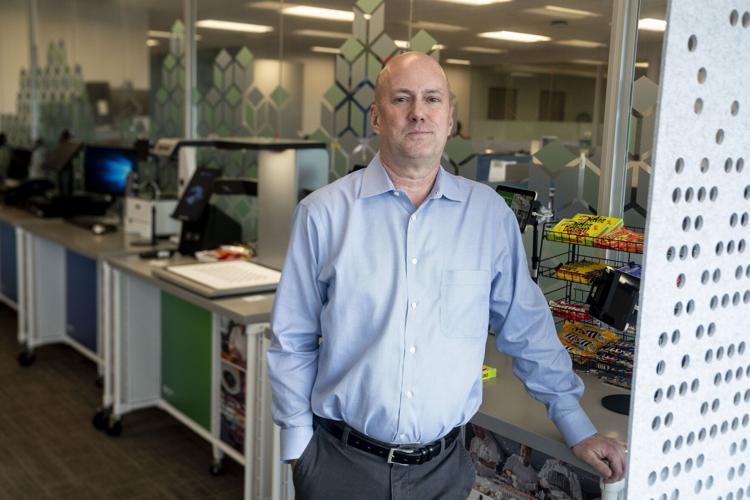
Jeff Wilkinson, chief information officer at Delaware North, has helped lead the company's move to tech advancements across business operations, including in the concessions and food and beverage industry.
When Wilkinson thinks about the artificial intelligence, technology and service style and data information he now works with every day, he considers it a “fun world to play in.” He has helped lead Delaware North’s move to tech advancements across business operations, including in the concessions and food and beverage industry.
“When I first got the call about this opportunity, I asked, ‘Are you looking at the right resume?’” Wilkinson said. “I had no hospitality background, but I think the Jacobs family and the CEOs were very interested in bringing in someone from the outside to lead the technology transformation.”
People are also reading…
He has been involved with worldwide clinical trials and started his career with pharmaceutical behemoth Merck & Co. Wilkinson also spent 11 years with AmerisourceBergen Inc., a pharmaceutical distribution company in Chesterbrook, Pa., where he focused on global data delivery and insights and technology innovation. He then moved to General Electric in Fairfield, Conn., where he served as vice president and commercial chief information officer, and was part of the company’s digital transformation.
Q: How has AI, tech and automation changed the hospitality industry?
A: There’s what we do in the back of the house, internally, at Delaware North, using capabilities like predictive analytics, which have been around for years.
We look at how we advance our knowledge and awareness of our data signals and how we apply more predictive models, and more recently, we really jumped into AI capabilities to generate some insights and patterns we might not have seen.
Some examples could be looking at inventory management and replenishment and staffing appropriately for peaks of high demand, whether it is at an airport or sports venue.
The other way our course is changing is on the guest side, or front of house. We’re all consumers who have heightened expectations, and it’s no different with our guests. They want fast, secure, seamless and convenient, so we’re looking at where it makes sense to bring in more self-checkout capabilities, making transactions as easy as possible.
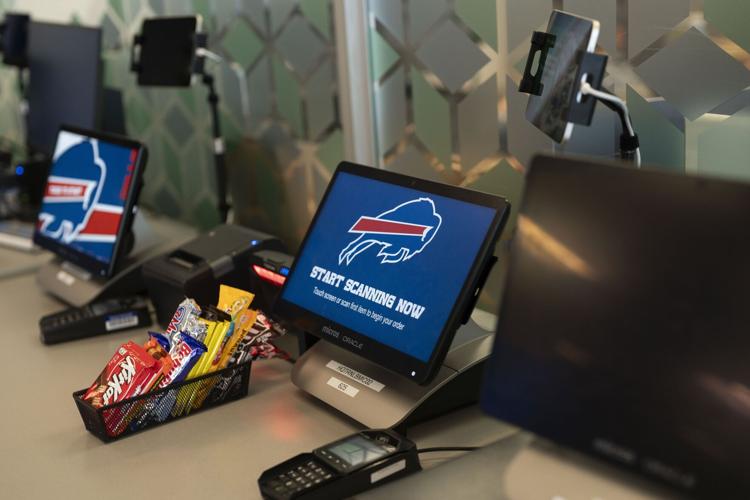
A couple years ago we used to ask our guests to scan the products themselves, and now it is as simple as dropping it on the tray and it’s going to detect what you want, and then you swipe your card, and you walk out.

When Delaware North's Jeff Wilkinson considers artificial intelligence, technology and service style and data information a “fun world to play in.”
Q: Is Delaware North also bringing that type of experience to its own workforce?
A: So much emphasis is on the guest experience, but let’s not forget that employees are the most important asset of any company. We want to understand some of the pain points or areas of friction that our employees have and bring them many of the same capabilities.
At our tech lab, employees have the opportunity to self-serve and self-diagnose many of their own problems, like password resets, and if they need additional tech support, they can walk up to the tech bar, and someone is there to quickly assist them.
Q: What are some of the tech innovations Delaware North is working on?
A: There are a lot of things we’re taking a look at. Going back to five to seven years ago, IOT, which is the internet of things, was very popular, and that’s about using sensors – piloting the use of understanding what are the points of egress, starting to count people in and out.
We’re using capabilities like that to create a better guest experience. IOT is definitely something we continue to explore. We’ve made a lot of investments in, first, understanding what the guest expects with self-service, and we’ve piloted and rolled out a large number of self-service concepts across airports, parks and sporting locations, and we have many of them here, in our backyard in Buffalo.
That is an area where we feel there seems to be a change almost every three our four months in the capabilities and offerings, and we’re constantly experimenting.
Q: What does it take for products to go from test sites and pilot programs to becoming part of Delaware North’s footprint?
A: We’re not a heavily regulated industry, so we tend to have the ability to pilot fairly quickly, and it is low visibility and low risk. That could be a matter of us wanting to experiment with this new kind of device and put it out there to see how it operates.
If we’re talking about a production pilot, where we want to take something new and put it in a baseball stadium, it can’t fail in front of our guests and clients, so there is some rigor that goes into it. We do a quick risk assessment, and then put that technology out in the wild as a production application.
We’re collecting a lot of data points, like guest adoption, are there concerns, do we see a lot of people confused with how to use it, are we seeing faster through put, are we seeing changing buyer patterns?
As we conclude the pilot, we’ll make a decision whether this offering is better than what we already have. If the answer is yes, we’ll talk about what it will take to go from a pilot to a fully supported production application.

A look into an area where potential customers and guests can try out different devices at Delaware North in Buffalo. The company is working to meet consumer demand for a fast, secure, seamless and convenient guest experience.
Q: Why have these advancements been necessary for the industry?
A: We can’t tread water and stand still. Not only is technology changing around us, but the expectations of our guests, clients and employees are accelerating, so we’ve got to at least keep pace, and our desire is to leapfrog ahead.
Everything is happening very quickly. It was just over a year ago that ChatGPT started to emerge in people’s dialogue. Imagine how far we’ve come with AI in the last 12 months. Last week, we pulled together and shared with our CEO a 60-second video clip that was fully AI generated on a potential new brand offering.