

When things get back to normal ...
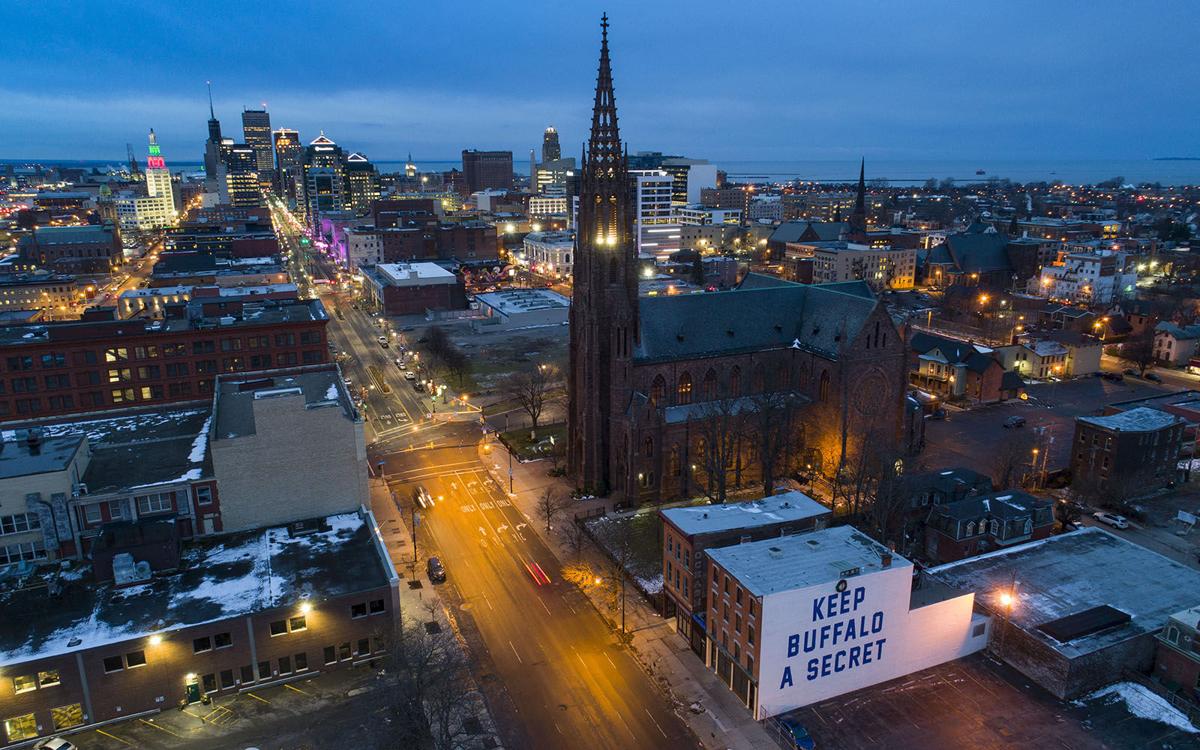
With the Covid-19 pandemic disrupting so much of Buffalo Niagara's everyday life and its economic foundation, getting back to normal won't happen overnight – and for some segments of Western New York – probably not at all.
So the path for the Buffalo Niagara economy as the pandemic eases is likely to be quite different from the path it was on before the outbreak, when much of the talk still centered on the region's nascent renaissance.
Now, with so much talk centered on getting back to normal, there likely will be a new normal that emerges from the pandemic.
Tourism patterns will change after so much travel was deferred during the pandemic. Restaurants, forced to adapt to dining restrictions, have become better at offering takeout and delivery.
People are also reading…
Low-wage workers, who bore the brunt of the job cuts during the pandemic, will be challenged to develop new skills to fit in with the changing shape of the post-pandemic job market.
Technology – a weak spot in the Buffalo Niagara economy heading into the pandemic – has taken on even more prominence as office workers did their jobs from home.
But that shift also presents an opportunity for Buffalo Niagara now that more companies embrace the notion of employees working remotely, even from locations like Western New York, where living costs are lower than in many of the tech hotbeds.
So change is coming. We asked a smattering of Buffalo Niagara leaders what the region needs to do to be ready for it.

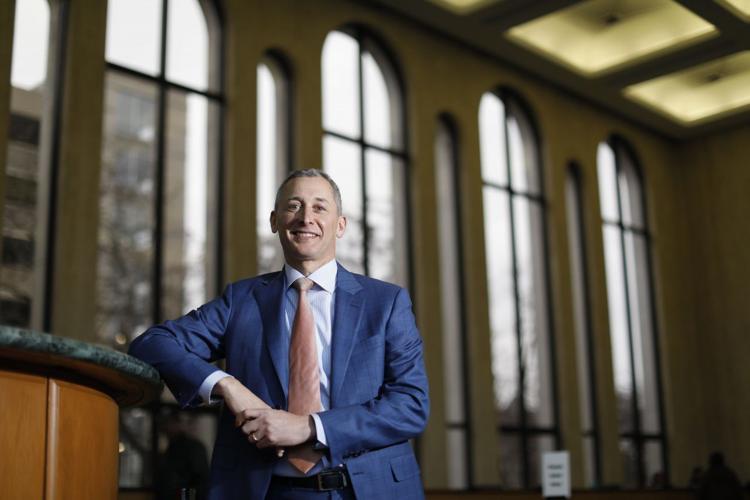
M&T Bank Chairman and CEO René Jones believes Buffalo is equipped to take on problems brought about by the pandemic.
Chairman and CEO, M&T Bank Corp.
As chairman and CEO of M&T Bank, René F. Jones leads an economic powerhouse in the Buffalo Niagara region.
He sees the toll the pandemic has taken, particularly on vulnerable populations and businesses. But he also sees opportunity for the region to recover, particularly by embracing innovation and tapping into homegrown talent for tech jobs.
M&T’s tech hub, which the bank is preparing to move into at Seneca One tower, reflects that spirit. Jones says he likes the early results of other tech companies joining M&T at the tower, which was part of the bank’s vision.
Jones also believes Buffalo is equipped to take on problems brought about by the pandemic.
“It's very easy for us to get the parties that can make a difference in a room and begin to work together to solve those problems,” he said. “So I think even though there is some adversity and some hard work ahead, I think that we're probably very well positioned to tackle this problem.”
– Matt Glynn
Read more: Rene Jones is bullish on a Buffalo comeback

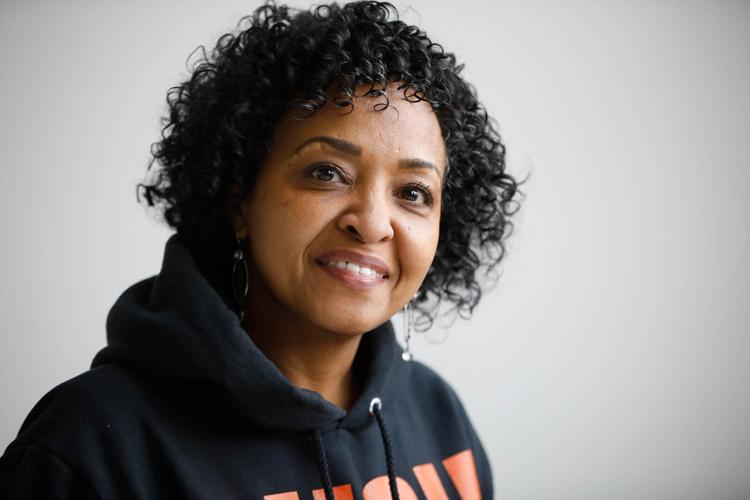
"People are in leadership roles for entirely too long, and they don't make way for new energy to step in that may do things differently," said Rahwa Ghirmatzion, executive director of PUSH Buffalo.
Executive director, PUSH Buffalo
Buffalo Niagara's ability to soar in the coming years will depend on whether seemingly intractable problems are addressed creatively and a new generation of leaders are allowed to emerge, said Rahwa Ghirmatzion, PUSH Buffalo's executive director.
"In Buffalo we have a concentration of poverty and we have really deep inequity, especially racialized inequity," Ghirmatzion said. "The biggest thing I see is that people want to keep doing the same thing expecting different results. What we need to do is to really think outside the box of what is being done, and to do it boldly and courageously."
Ghirmatzion said government term limits are needed, though she said not-for-profits and others also need to hit the refresh button.
"People are in leadership roles for entirely too long, and they don't make way for new energy to step in that may do things differently," Ghirmatzion said. "There needs to be a changing of the guard in order for that to really take hold."
– Mark Sommer

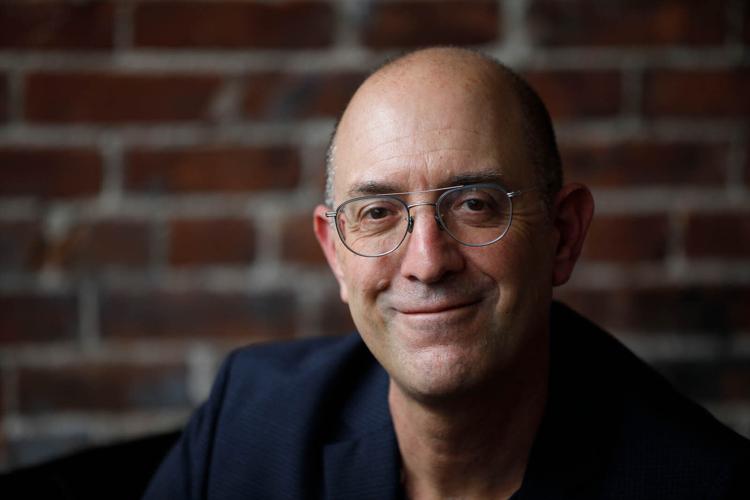
Bill Maggio says it could be 2022 until a full recovery.
CEO, Jacobs Institute
Few people are as well positioned to comment on Buffalo's business community as Bill Maggio.
The managing partner of private equity firm Lorraine Capital, Maggio also is CEO of the Jacobs Institute, vice chair of Kaleida Health's board of directors and former chair of the 43North business competition.
From that vantage point, Maggio saw significant progress before the Covid-19 pandemic struck, noting developer Douglas Jemal's ongoing investments in Buffalo and the growth of startup success ACV Auctions.
The virus has taken its toll on the regional economy, he conceded, in particular health care providers and small businesses. But he's optimistic once the vaccine is widely distributed, confidence and momentum will quickly return, though it could be 2022 until a full recovery.
As one example, 2020's 43North contest was canceled but the state committed to funding it in 2021 – and Maggio predicts the finals will take place on stage at Shea's Performing Arts Center with an audience of 3,000.
– Stephen T. Watson

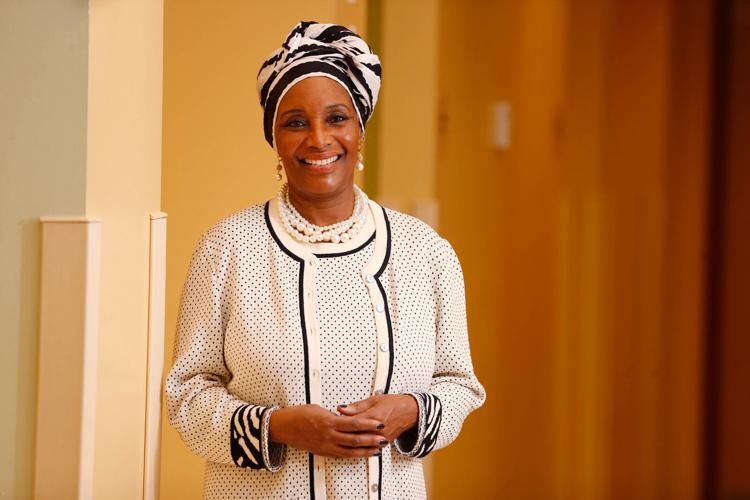
“This is a time of enlightenment,” said LaVonne Ansari.
CEO and executive director, Community Health Center of Buffalo
LaVonne Ansari was chatting with some colleagues recently when she said, “Just think of the tension that we had with this presidential election. Now, just imagine living like that every day.” Her objective in pointing out the trepidation and conflict that stretched out over time? “That's what racism feels like,” said Ansari, who is the CEO and executive director of the Community Health Center of Buffalo and board chair for the Community Health Care Association of New York State.
From those positions – and her previous role as vice president of Niagara County Community College, where she was the first Muslim African American woman to hold that job – Ansari is speaking out against structural systems that have created disparities for people of color.
“This is a time of enlightenment,” said Ansari, who holds a doctoral degree from the University at Buffalo. “Change comes when there is pressure and there’s a crisis. Those of us of color always knew that disparities existed. Covid has exposed a lot of the inequalities.”
– Tim O'Shei

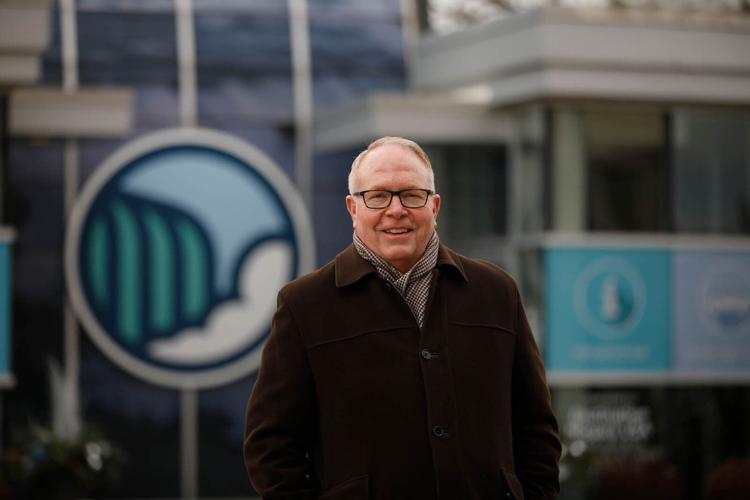
John Percy continues to promote Niagara Falls as a wide-open, natural attraction – with plenty of open space for social distancing.
President and CEO, Destination Niagara USA
John Percy is gearing up for a big challenge: How to attract more travelers to Niagara Falls once the pandemic lifts and the expected gush of vacationers hit the road.
It will be a challenge, because the president and CEO of Destination Niagara USA knows there will be plenty of competition, from every tourist-starved market, not only in the United States, but across the globe.
With so many choices, it's essential that Niagara Falls stand out.
Percy thinks Niagara Falls is on the right track with its three-year-old campaign to promote the Falls as a wide-open, natural attraction – with plenty of open space for social distancing.
"We are so leisure-based, we're accessible, we're drivable, we're affordable, and we have a lot of open spaces or rural open spaces," Percy said. "That's been our campaign – wide open spaces, now open for adventure. It has proved very well for us this summer."
With a limited marketing budget that was stretched even thinner by the steep drop in the hotel bed tax revenues to fund the tourism campaign, travelers will have plenty of suitors once Covid-19 subsides.
The challenge is getting Niagara Falls to stand out.
– David Robinson

Douglas Jemal, president and founder of Douglas Development Corp., said he sees opportunities that mirror what his hometown looked like 30 years ago.
Owner, Seneca One tower
Washington, D.C., developer Douglas Jemal is confident in Buffalo's ability to come back stronger.
The Seneca One tower owner sees opportunities that mirror what his hometown looked like 30 years ago. To the real estate veteran, Buffalo can only go up, and he is committed to leaving his own mark in helping the Queen City get there.
But the government and community leaders need to do their part as well, Jemal said.
By supporting development and by offering incentives to lure big technology companies here with hundreds and thousands of jobs, it would support of the kind of technology hub that Jemal and M&T Bank Corp. are already working to create at Seneca One.
– Jonathan D. Epstein

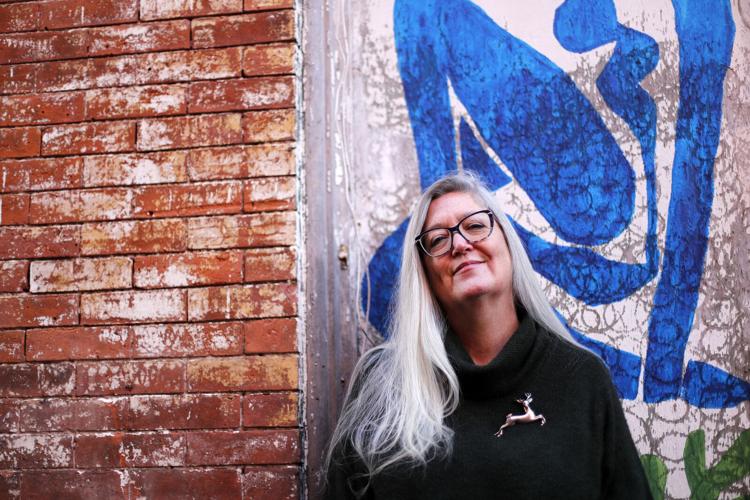
Maura Crawford, proprietor of Coco Bar & Bistro, is struggling to keep her business alive.
Operator, Coco Bar & Bistro
Maura Crawford cut her teeth on Buffalo restaurant realities more than 25 years ago as a partner in Left Bank, which yet sails on Rhode Island Street, and Le Metro, the former Euro-chic bakery-restaurant with locations on Elmwood Avenue and in Williamsville’s Walker Plaza.
At Coco, 888 Main St., Crawford has tried every service variation, currently doing après-ski-themed crêpes and more from a chalet out front.
She’s so tired. The federal government won’t save Buffalo restaurants, she says, but state and local government ought to be taking a more cooperative approach with small businesses, doing what they can to help them survive.
Why hasn’t Albany communicated with the remaining employers in New York State about what to expect when it comes time for an unemployment insurance assessment? That’s the bill every enrolled business gets if the New York State fund runs out of money. Like the rest of America, New Yorkers are suffering the worst jobless year since the Great Depression. Help from Albany ought to start with telling everyone responsible for employees what to expect in January.
In survival mode since March, struggling to keep her business alive for the people it serves inside and outside the building, it has been hard for her to imagine much past that horizon.
– Andrew Z. Galarneau