
Dr. Kathy O’Leary was getting ready for work in October 2019 when she collapsed to the floor from a life-altering stroke.
Her family rushed her to Gates Vascular Institute, where neurosurgeons were able to pull the blood clots out and restore blood flow.

“There was already a lot of brain damage done, so I couldn’t walk, I couldn’t stand,” recalled O’Leary, an anesthesiologist at Roswell Park Comprehensive Cancer Center.
O’Leary can now stand, walk and is pushing herself to do a lot more, her ongoing rehabilitation given a boost from a next-generation medical device she had implanted in November in Western New York.

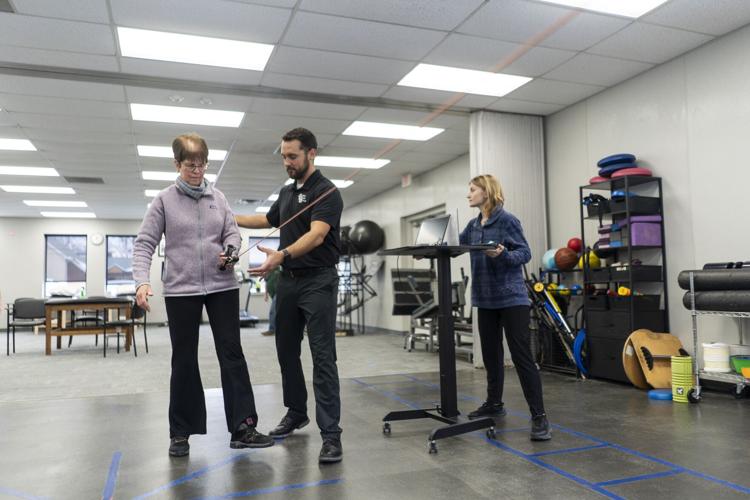
As physical therapy intern Brianna DeMarco, right, stands by with the laptop running Vivistim’s Bluetooth program, physical therapist John Mayer supports Kathy O’Leary on an exercise encouraging muscle rehabilitation at Buffalo Rehab Group in West Seneca.
The Vivistim Paired VNS System, implanted under the skin in the upper left chest and neck during a same-day procedure, pairs vagus nerve stimulation – sending mild electrical pulses to the vagus nerve – with occupational or physical therapy to help stroke survivors regain hand and arm movements.
People are also reading…
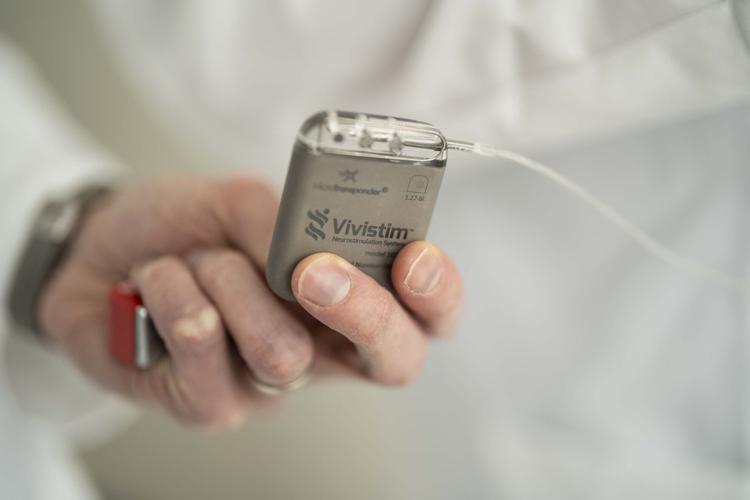
During rehabilitation exercises and at-home activities, the Vivistim device – the size of a car key fob – is activated to gently stimulate the brain through the vagus nerve, which runs from the brain through the neck and chest to the abdomen. Those pulses to the brain paired with therapy helps strengthen the connections needed to regain arm and hand functions.
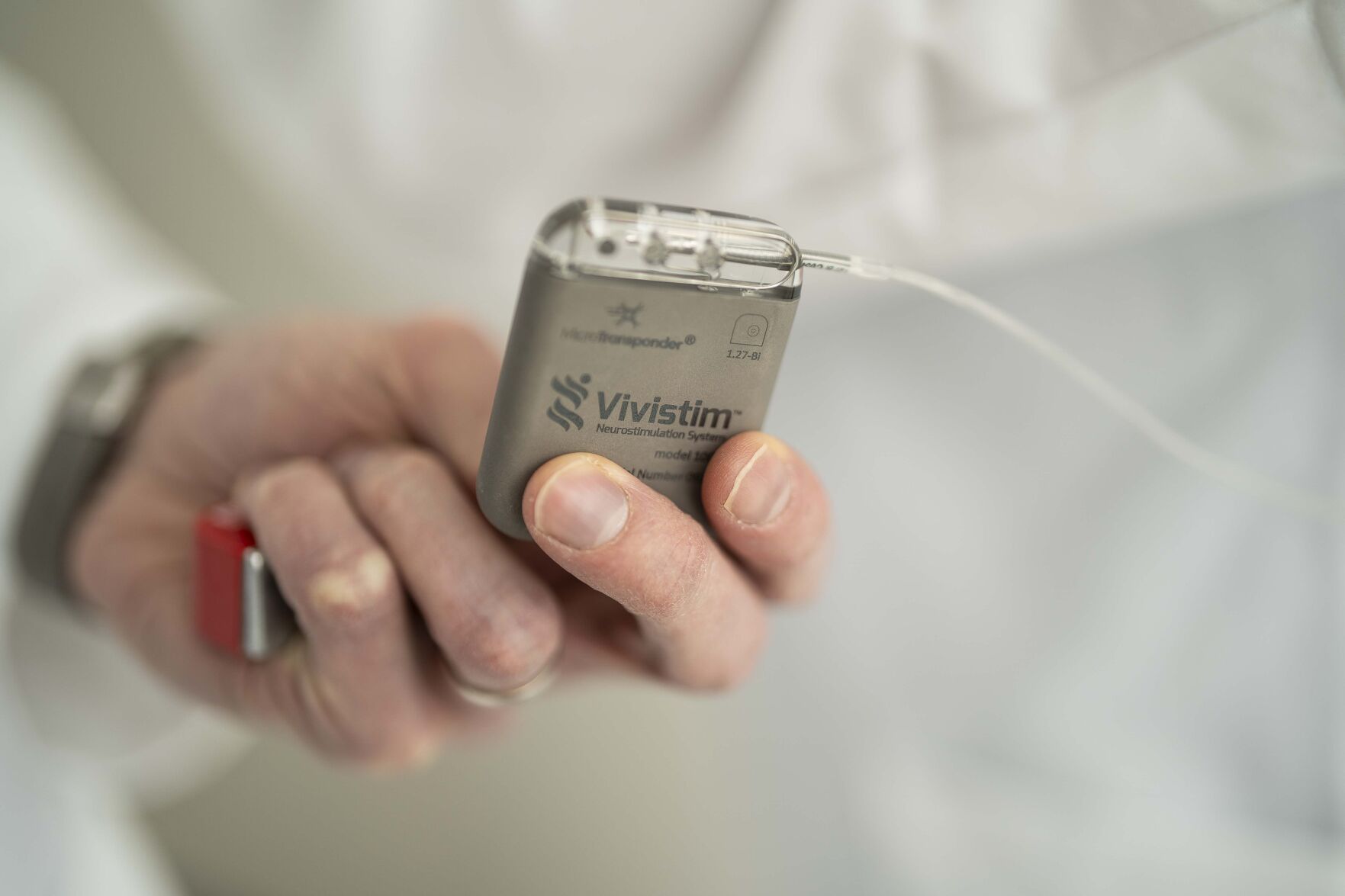
A Vivistim generator implant. The implant, programmed by clinicians and therapists, is placed in the chest and carries stimulation to the vagus nerve through a lead wire.
“For people like (Kathy), until recently, there were no good options,” said Dr. Adnan Siddiqui, vice chairman in the Department of Neurosurgery at the University at Buffalo. “You just had to accept that there was a part of your body that never worked, that will never work again.”
So far, UBNS neurosurgeons, including Dr. Jonathan Riley, Dr. Assaf Berger and Dr. Rosalind Lai, have implanted four local patients with the Vivistim device. Nationally, about 400 devices have been implanted in patients, said William Jarvi, territory manager for MicroTransponder, the Texas-based maker of Vivistim.

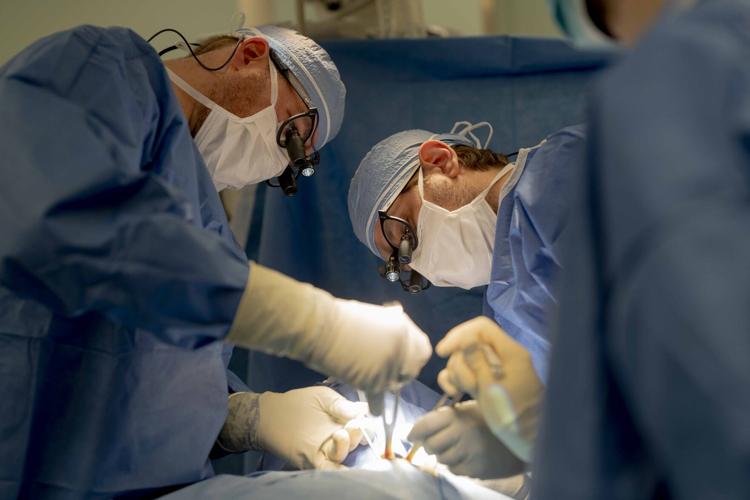
Dr. Jonathan Riley, left, leads an operation to implant a vagus nerve stimulation device for an epilepsy patient at Gates Vascular Institute. This procedure, which involves making two incisions, one on the left side of the neck to expose the vagus nerve, and another in the upper left chest, is identical to the procedure to implant a Vivistim device.
Experts say it’s the first time in a long time that new technology has come out for stroke rehabilitation, especially for patients who had strokes years earlier and may have become doubtful they’d ever move a certain limb again.
While the device is new, the procedure to implant it has been around a long time. For instance, the vagus nerve stimulation device implantation that neurosurgeons have long performed for epilepsy patients is practically identical to the Vivistim implantation procedure.
O’Leary said she arrived for her Vivistim implantation procedure – performed by Lai – on Nov. 5 around 8:30 a.m., and she was home by 3:30 p.m.

Dr. Rosalind Lai performed a Vivistim implantation procedure for Kathy O’Leary at Gates Vascular Institute.
Two to three weeks after the device is implanted, a patient starts in-clinic rehabilitation sessions – typically 90-minute appointments, three times a week for six weeks.
O’Leary just finished her three-times-a-week intensive therapy and is now going to Buffalo Rehab Group’s location in West Seneca two times a week. There, she’s worked closely with John Mayer, a physical therapist and director of neurologic care, and occupational therapist Mary DiGiacomo.
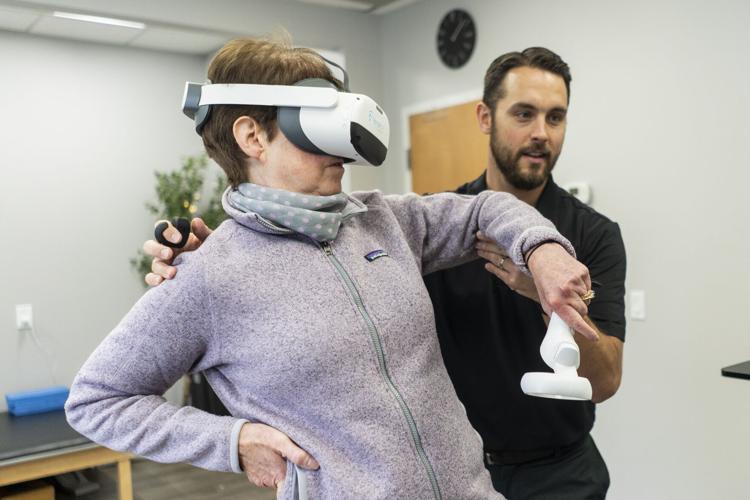
She works with them on a number of exercises, ranging from a virtual reality game where O’Leary has to reach to pick up coins to using a resistance machine to walk 15 to 20 feet while pulling the handle. With each exercise, the therapist uses a remote to deliver the stimulation to the vagus nerve. As O’Leary practiced opening a door during a recent session, Mayer said he delivers about six stimulations for each repetition of opening the door.

Using a Vivistim device on his right hand, physical therapist John Mayer supports Kathy O’Leary as she plays a VR game encouraging muscle rehabilitation.
Mayer said the Vivistim device is helping to change the rules of what was previously possible for stroke survivors, noting the arm in particular can be very stubborn to regain function in. At home, patients like O’Leary can do a rehabilitation session of their own by activating Vivistim with a specially provided magnet.
“It’s just a really amazing tool that’s kind of rewriting what we can do with the patients,” he said.
O’Leary said she’s pushing herself harder because of the procedure and the hope it’s given her. She’s back to driving and walking without a cane. She goes to work two days a week in the preoperative clinic at Roswell Park.
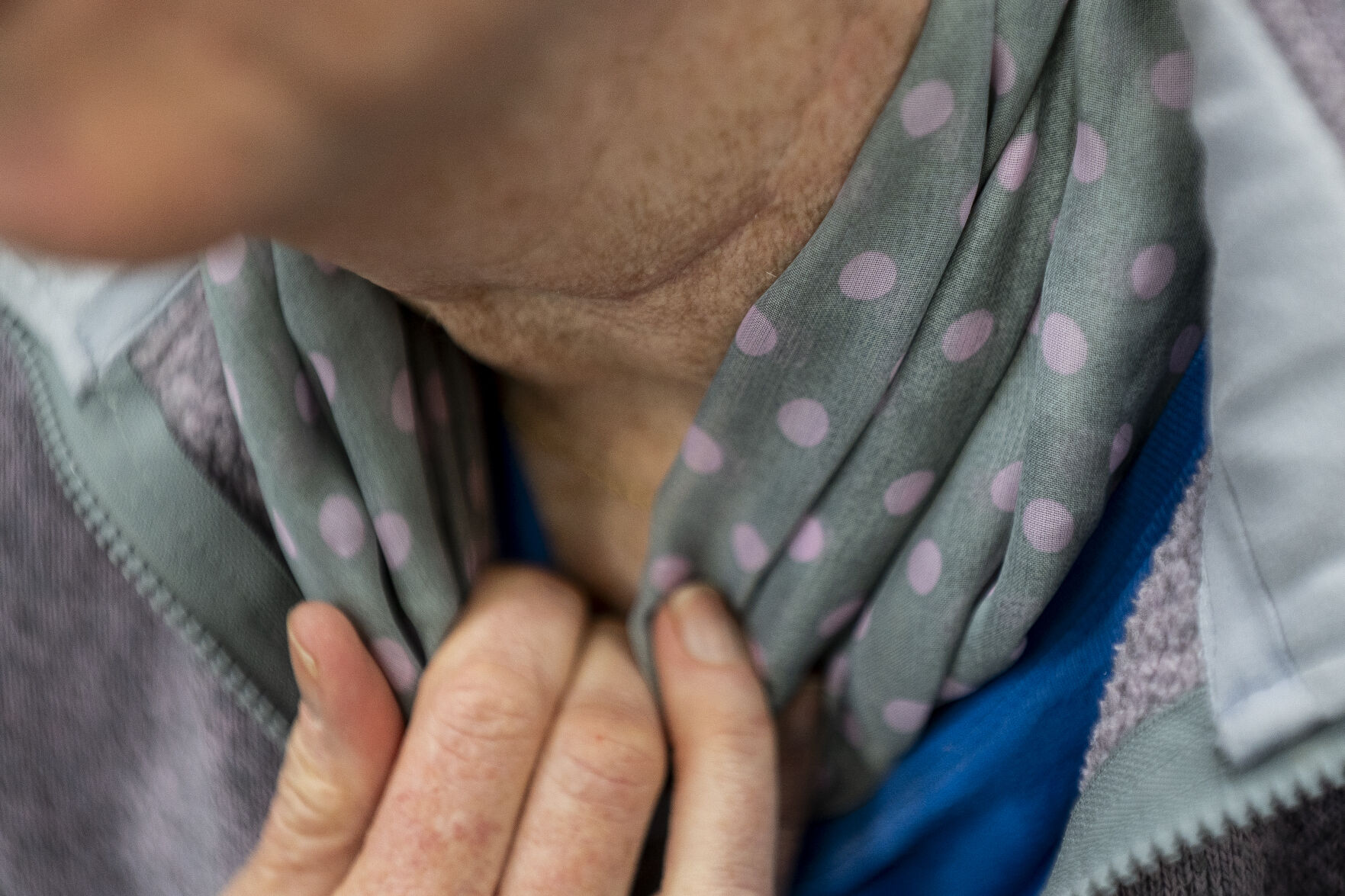
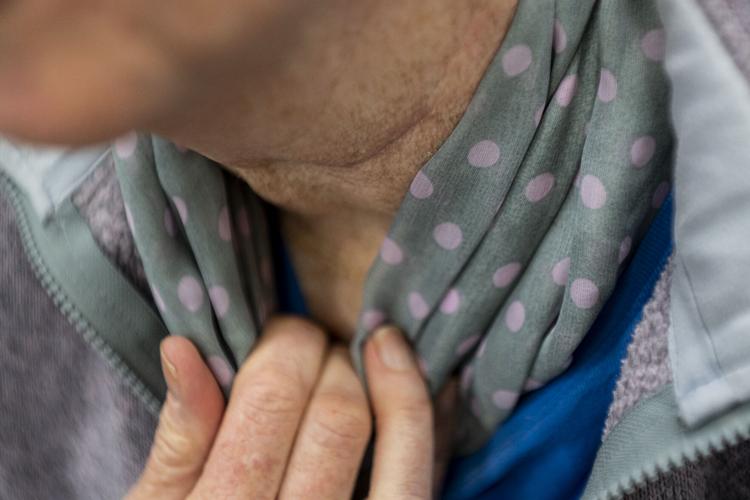
Kathy O’Leary displays a faint scar in her neck from the installation of her Vivistim implant.
Everyday tasks are still a struggle, but O’Leary is pushing. She said she’s hoping to one day be able to blow dry her hair, able to hold a brush in one hand and the blow dryer in the other.
“A simple little thing, like opening a door, I thought I could never do that,” she said. “So I’ve learned to never say never. It’s just ‘not right now.’”
Jon Harris can be reached at 716-849-3482 or jharris@buffnews.com. Follow him on X at @ByJonHarris.

Jon Harris
Healthcare reporter