
Buffalo Niagara’s colleges and universities continue to face some major dilemmas.
There’s declining enrollment, dwindling college-age populations and the need to address workforce development gaps.
The state’s response has been to institute a growing number of programs that offer free tuition to prospective college students.
New York is doing what it can to get students enrolled to attend not only state institutions of higher education but also private schools.
The state’s Excelsior Scholarship provides full-time students with the opportunity to attend SUNY and CUNY colleges and universities tuition-free.
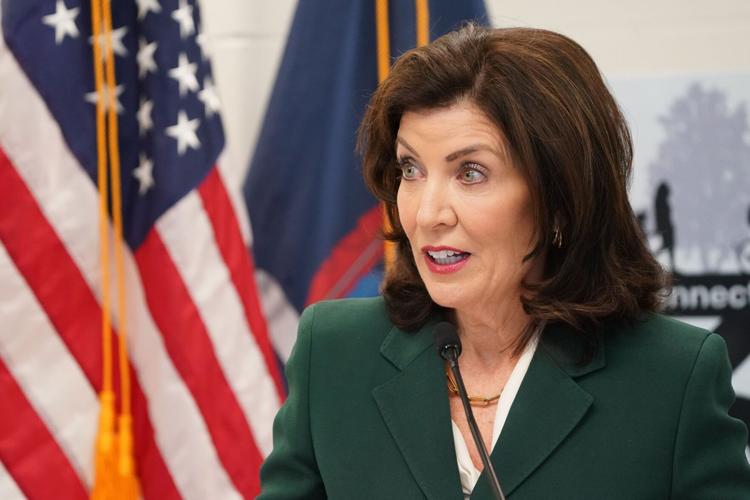
Gov. Kathy Hochul lauded during her recent State of the State address that in the past two years, the state has more than doubled tuition assistance at SUNY and CUNY and expanded eligibility.
People are also reading…
Meanwhile, local private schools are partnering with the state to offer full-time students who are starting their academic studies an opportunity to receive free tuition for select degrees in high-demand fields as part of the state’s Career Pathways Training program.

Gov. Kathy Hochul has proposed a $252 billion state budget that would continue tax surcharges for high-income earners and cut middle-class taxes.
Students from families earning $125,000 or less can attend a SUNY or CUNY college and pursue an undergraduate degree tuition-free, thanks to the Excelsior Scholarship. They must be enrolled in full-time study (at least 12 credits per term) and then stay in New York for at least the duration equal to the number of years the scholarship was received.
Hochul is trying to take that a step further. She’s proposing making community college free for students ages 25 to 55 who pursue associate degrees in programs for high-demand fields like health care, education and manufacturing. If passed, the state would also cover the cost of books, transportation and other fees.
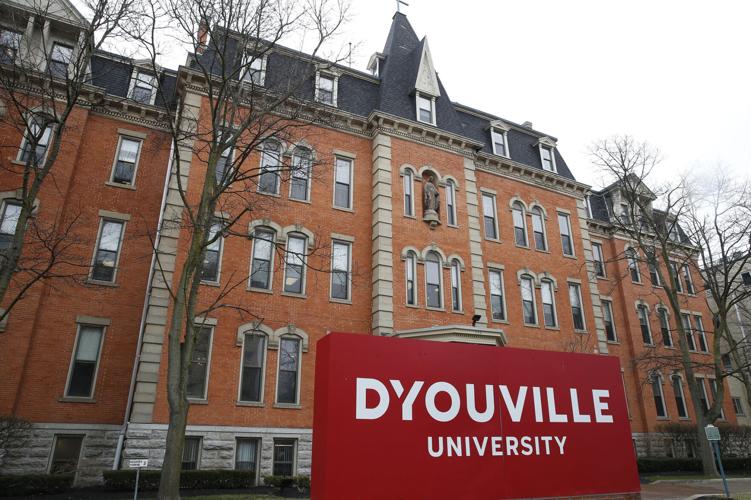
D’Youville University and Trocaire College are among the local private colleges participating in the state Career Pathways Training Program, which covers the cost of education for health care workers as part of an initiative aimed at addressing the industry’s workforce shortage.
Through this program, eligible students can receive a fully funded degree or certificate in high-demand health care fields.
Canisius University also is trying to make education affordable to all students in its Buffalo community by launching a four-year, full-tuition scholarship available to any qualifying student whose home ZIP code starts with “142,” Canisius President Steve Stoute announced in October.
These programs are in addition to the state’s Say Yes to Education program.
That provides a scholarship promise to Buffalo Public Schools and charter school graduates, in addition to pre-K through grade 12 supports that children and families need to stay healthy and succeed in school. The program also helps connect young people to job training and employment opportunities.
At D’Youville, that includes pharmacy technician, credentialed alcoholism and substance abuse counselor, nurse practitioner, family nurse practitioner, physician assistant, licensed mental health counselor and registered nurse, to bachelor’s degrees in nursing and accelerated nursing.
“This program is not only life-changing for our students, but it also plays a pivotal role in remedying the ongoing health care crisis by upskilling current professionals and equipping the next generation of health care professionals with the education they need to succeed,” said D’Youville University President Lorrie Clemo.

D’Youville University is partnering with the Beacon Center for outpatient behavioral health treatment to help train counselors and provide a “springboard” for employment.
At Trocaire, academic programs eligible for the program include licensed practical nurse, registered nurse and medical assistant.
“This is a tremendous opportunity to ease the financial stress for students who want to pursue a health care career,” said Dr. Bassam Deeb, president of Trocaire College.
Canisius University also is trying to make education affordable to all students in its Buffalo community by launching a four-year, full-tuition scholarship available to any qualifying student whose home ZIP code starts with “142,” Canisius President Steve Stoute announced in October.
The Buffalo Promise Scholarships beginning in fall 2025 will be a “last dollar in” award that will cover 100% of tuition costs after federal and state aid are applied. The scholarships will cover all 30 or so ZIP codes that start with “142” – including suburbs and rural areas as well as city neighborhoods.

The state Excelsior Scholarship program offers free tuition to SUNY and CUNY colleges and universities.
Canisius is also the closest college to several of the city’s other lowest-income ZIP codes – including 14211, 14212, 14203, 14204, 14207, 14211 and 14215, most of whose average adjusted gross incomes are under $35,000, according to the U.S. Census Bureau. That includes Buffalo’s East Side neighborhoods.
It will be open to any student who applies and is accepted to Canisius whose family adjusted gross income totals $125,000 or less.
“We want to make sure a Canisius education is accessible to students in Buffalo by making it financially possible,” Stoute said. “We want our local students to stay home and pursue a Canisius education, become part of the local workforce and become real advocates for change for Buffalo by helping future generations break the cycle of poverty that has plagued our city for so long.”
These programs are in addition to the state’s Say Yes to Education program.
That provides a scholarship promise to Buffalo Public Schools and charter school graduates, in addition to pre-K through grade 12 supports that children and families need to stay healthy and succeed in school. The program also helps connect young people to job training and employment opportunities.