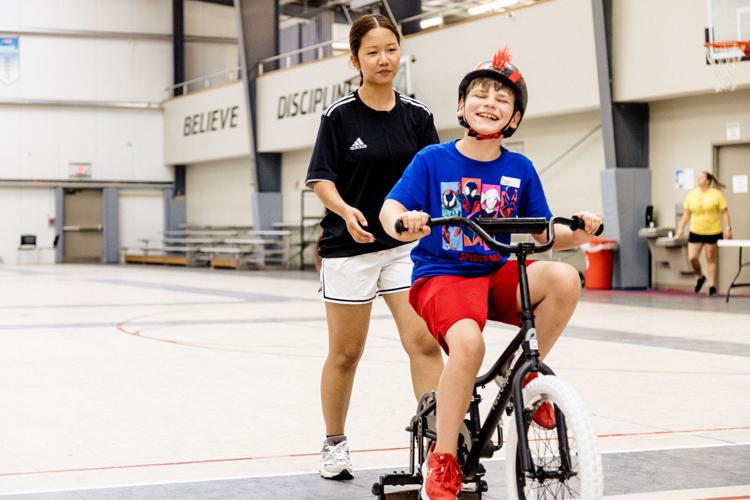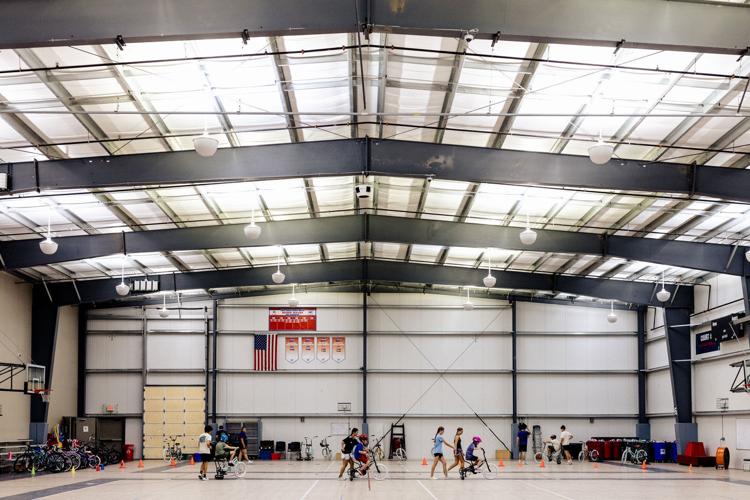


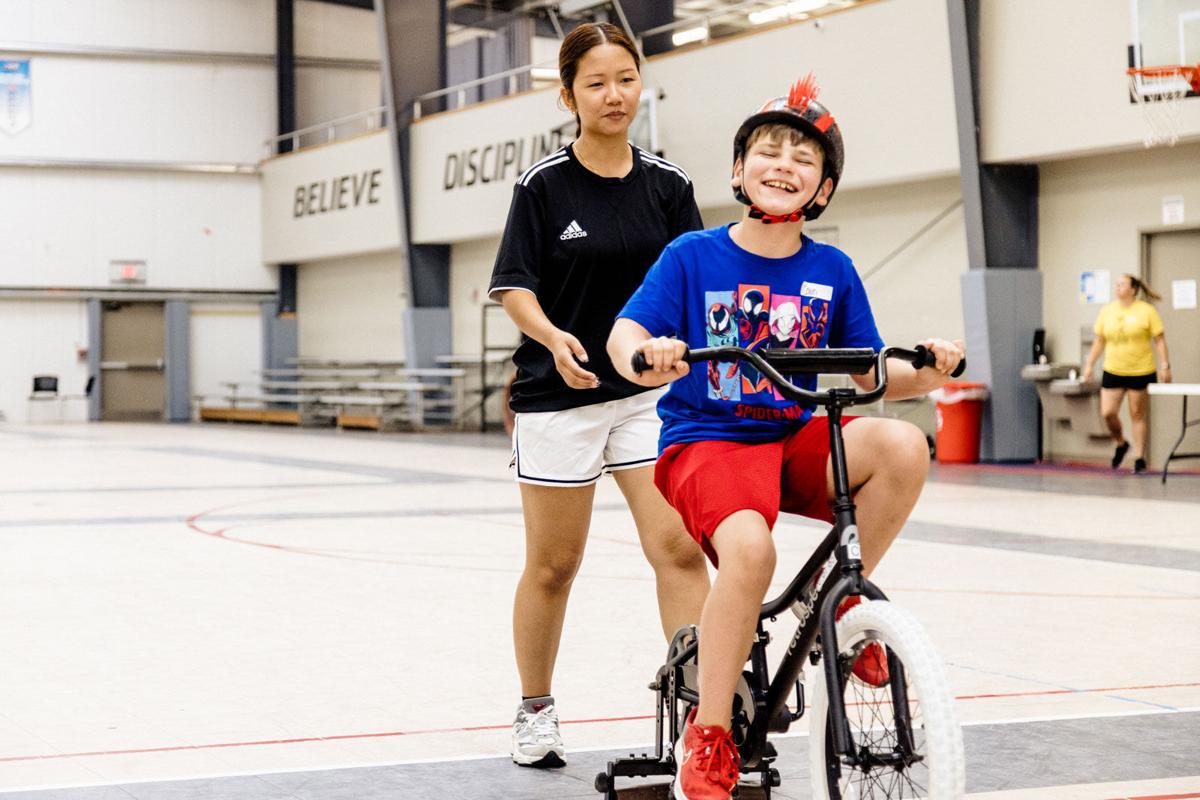
Riding a bicycle is exhilarating: There’s an initial push to gain momentum, finding equilibrium and then the joy of fast and free movement. But those elements that make biking so exciting may also present obstacles for would-be cyclists.
That’s where the annual iCan Bike Camp comes in. It helps people with disabilities develop the capability and confidence to ride. Over five days, trained staff and volunteers support riders ages 8 and older through skill-building exercises.
“It gives a whole new sense of independence,” says Renee Kazukiewicz, who chairs the Buffalo iCan Bike committee. “My daughter did the camp nine years ago … As soon as she learned to ride, we took a family vacation to Presque Isle and biked the trails there.”
Renee helps with registration and spotting riders, looking on as they discover the same freedom and fun her daughter did. “I think it’s incredible.”
People are also reading…
Volunteers arranged the first iCan Bike Camp in Western New York in 2009. The Champion Project, a local non-profit, now handles planning and hosts at its facility in West Seneca.
Nathalie Garcia-Salas works for iCan Shine, the nonprofit that holds the camps around the country. “It’s a high-speed process, but we adjust the program according to every rider’s abilities,” she says.
Progression is key

“The most important thing in our fleet is the roller bike,” explains bike technician Dakoda Reynolds. “Instead of a rear wheel, it has an interchangeable roller on a bracket. They start flatter. As the riders start getting more stabilized, we add more taper.”
The progressive process is key to developing equilibrium and confidence. “Taking off training wheels is all or nothing,” Dakoda says. “The roller bike has that in-between balance we can focus on.”
Next, riders mount tandem bikes with staff. “They pedal and get a feel for that rhythm on the tandem,” Nathalie explains.
On “Launch Wednesday” riders use two-wheeled bikes with tall handles.
“We’re able to guide them and see their progress; if they’re pedaling, if they’re steering, what interventions to include,” Nathalie says. Then, “Thursday, we start letting go of those handles.”
Riders practice pushing off, applying the hand brake and using kickstands.
Finally, riders head outdoors.
“Outside is where we see the magic of it all,” she says. “We’re able to see their progress and their success, and it’s just amazing.”
Success for all
Sara Zapalowski got involved as a high school volunteer. She loves connecting with riders and seeing their development. “I’m a special ed teacher nowadays; this is the whole reason I became one,” she says.
Eighty percent of participants finish camp able to ride solo, but “no matter what, every kid has some sort of success,” Sara adds. “Even if they’re not riding at the end of the week, maybe they’re not afraid anymore, or they can handle putting a helmet on when that wasn’t a thing that they could do because of sensory needs.”
“We want to provide an opportunity for athletes with disabilities to experience that joy of riding,” says Adrienne Marks of The Champion Project. “The joy of the air blowing through your hair, with your friends next to you.”