
The setting sun bathed the Zumba class in its glow. Its rays provide an encore for the last act of the day. Nearby, children ran carefree across the grains of the boardwalk in search of last-minute adventure.
Tall warships quietly kept sentry nearby. Muted strains of music provided the score to this grand finale, a perfect summer's day at the Buffalo and Erie County Naval and Military Park in Buffalo, New York.
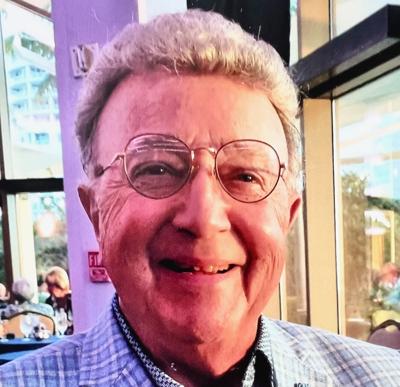
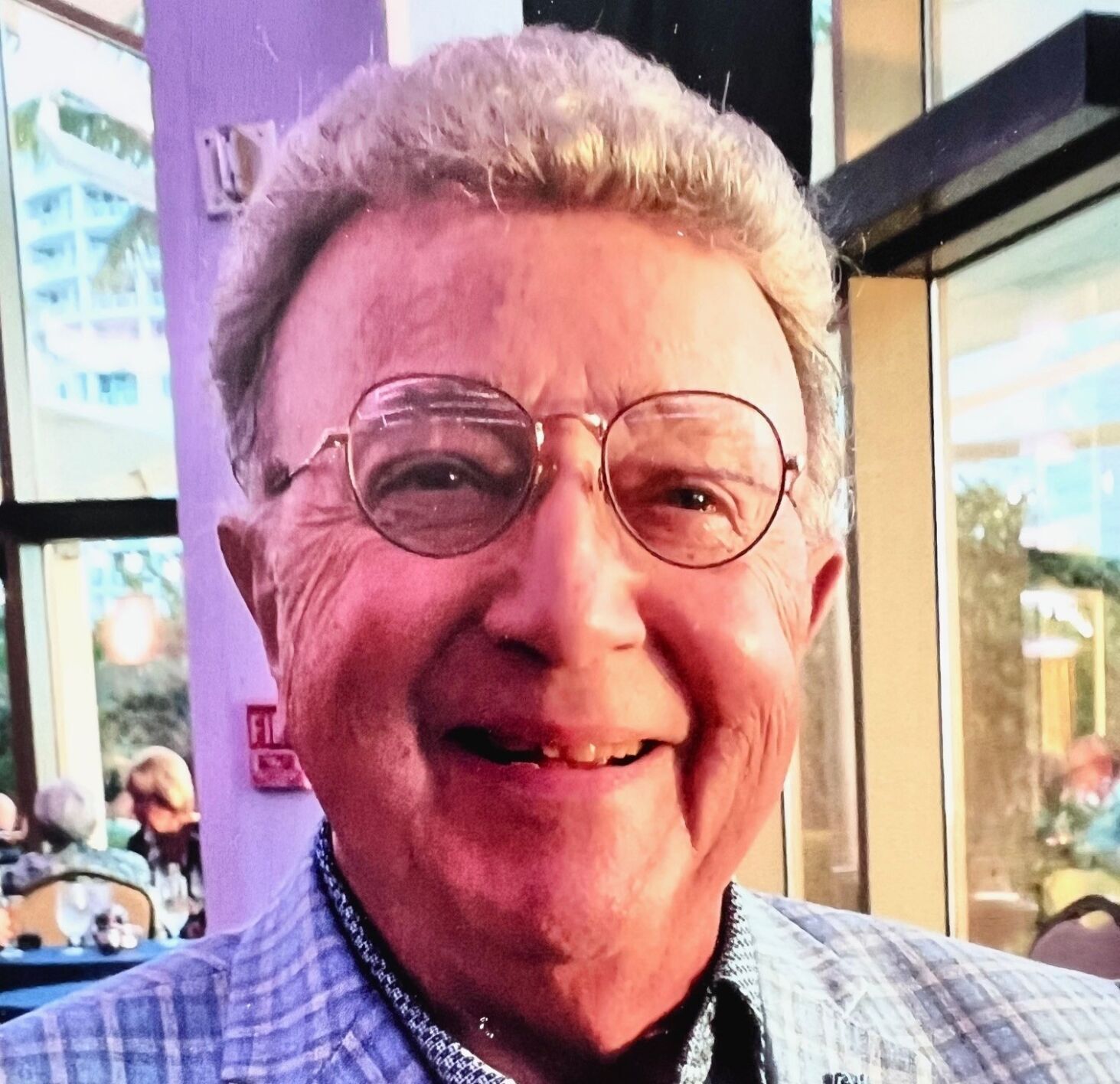
The origins of this creation tell a story of the park’s founder, Anthony P. LoRusso.
An attorney and real estate developer who has received numerous awards, including the "Landlord of the Year" from H.O.M.E. Inc., and the New York State Energy Research and Development Authority.
He strides confidently yet anonymously among the crowd, looking resplendent in a blue blazer with immaculate matching shirt and trousers. His eyes are a mixture of mirth and inquisitiveness.
His energetic gait belies his eight decades.
A century earlier, his grandfather was among the nearly 4,000,000 Italians who emigrated to America. Pietro LoRusso gained passage to America by taking the unenviable job of a coal shoveler in the extreme heat of a steamship’s underbelly.
Possessing little more than a loaf of bread and more than a little moxie, he overheard about a sailor whose absence created opportunity. Seizing the unexpected job, Pietro signed on and climbed aboard.
The voyage was overcrowded and dangerous. Boredom prolonged by grey seas, unceasing clouds, and nights so black they felt heavy. The familiar hunger pangs slowly joined by the gnawing fear of the unknown.
Upon arrival, he found work in New York on an amazing project. The Holland Tunnel was an engineering marvel connecting Manhattan to New Jersey. Pietro was a teamster driving the mules that carried wagonloads of debris out of the cavity.
As was common in those days, husbands often went to America first, securing employment and housing before sending for the family. Pietro’s dream of reuniting his family was set back when German U-boat activity limited Atlantic shipping. His son, Anthony, was born in Italy after he had departed for New York. He waited 10 years before father and son could finally meet.
They eventually came to upstate New York, living on a grape farm in Chautauqua, NY.
Their new life was paralleled by the fear of the Great Depression.
It was at this time that Anthony married his wife, Rose Rizzo. She soon delivered twins, and Anthony P. LoRusso was born on the eve of American involvement in World War II.
The war resulted in government demand for farm produce. What once was struggle morphed into prosperity.
At first, young Anthony was shy. However, he listened, often sitting quietly with his sister underneath the kitchen sink, and was mesmerized by the older generation’s talk about the war and the old country.
He recalls as an 8-year-old staying up past midnight to listen on the radio to the presidential victory of Harry S Truman over Thomas E Dewey.
Young Anthony’s inspirations also included his uncle, an attorney who often supplied him with periodicals that fueled his imagination for the world of law, business, and politics.
Although it was uncommon for many in his era to do so, he aspired to go to college and eventually to law school.
The summer of his 18th year, he secured employment as a "scaler" on the Niagara Power Project, receiving the nickname 'Tony Lo.' The demand for skilled labor on power projects abroad made him an offer; he could drop out of school for a year, travel, and work, making significant money, and later return to school.
"My father recognized the inherent dangers in this. He understood when I did not that if I left, I would probably never return to school." Following his advice, he resumed his education.
His decision took him on an unexpected adventure. He became involved with the Democratic Party, accepting an offer to be an Advance Man for the presidential campaign of Senator Robert F. Kennedy.
"I was just a young guy and thrilled to be involved with Senator Kennedy's campaign," LoRusso said. "It was an exciting time for me, and I was preparing myself after the election to possibly have a career in public service in Washington D.C."
That dream took a horribly unexpected turn at the hands of a hateful assassin in California on June 5, 1968, Bobby was no more.
Mournful and returning to Buffalo, LoRusso was freshly empowered with the confidence that experience begets; he dove headlong into his legal career. He moved quickly into positions of authority as an assistant District Attorney in Buffalo.
He was soon appointed City Court Judge for Buffalo. As a Family Court Judge, he discovered that he had the greatest power to make a difference.
LoRusso once said, "I would have these difficult juvenile cases come before me. They needed someone to believe in them, and often their parents had failed them. However, I found that the grandparents were the juvenile delinquents' greatest benefactors, and I often released them into their care. They were willing to do whatever it took to see them go on a better path. I was rarely, if ever, disappointed in that decision."
While on a family vacation, he came up with the inspiration for his most laudable accomplishment. Wilmington, North Carolina, had recently launched a Naval Museum. Knowing that the Buffalo waterfront was seeking economic recovery, a radical idea was conceived: Buffalo could build its own Naval Park.
He revered the 1944 classic movie "The Fighting Sullivans," the true story of the five Sullivan brothers who lost their lives when the USS Juneau sank in World War II.
In their honor, the Navy christened the USS Sullivans. Now that he was decommissioned, he wondered, “Was this ship available?”
Judge LoRusso acted quickly on his premonition. He was delighted to learn that the Sullivans, with its distinctive shamrock stack, was available for Buffalo.
A serendipitous moment occurred during a visit to Philadelphia to acquire the ship. A large Cruiser recently decommissioned, the USS Little Rock, was brought into the harbor.
The Navy offered them both to LoRusso and his group.
Working with various city and state leaders, funds were extended for the creation of the Buffalo Naval Park. The spot chosen at the foot of Main Street was a nearly century-old dock for lake ships crossing to the amusement park in Crystal Beach, Ontario, Canada. The Buffalo waterfront was ready.
The ships’ journey to Buffalo was not without some tense moments. An international treaty prohibited warships from entering the St. Lawrence Seaway. A series of phone calls secured passage, ultimately granted by Canadian Prime Minister Pierre Trudeau.
"It was a hectic time," Judge LoRusso said. "We humbly submitted to the Prime Minister that although these had the appearance of warships, they lacked the heart of a warship."
On July 4, 1976, as America proudly celebrated its bicentennial, the ships officially arrived, and the Buffalo waterfront was reborn.
LoRusso soon began investing in apartments.
His first purchase was a relatively small four-unit apartment building. Upon repairing and making upgrades to the building, he found that an avocation soon became a vocation.
“It started as a hobby, really. I was interested because of my grandfather’s investment in real estate. After a few years, that little building paid for my son’s school.”
He immersed himself in his new career. Acquiring properties and renovating them. He sought long-term opportunities. His long-standing belief is that "Everyone deserves quality, decent, affordable shelter."
He teamed with the Historical Trust to purchase and renovate a 110-year-old building on Virginia and 10th in the city. “Casa Shelby” opened to critical acclaim and is an anchor of stability. He advertises them as "immaculate apartments," and he believes his buildings need to maintain quality standards.
"We have created a beautiful and modern structure that the working class can afford....and that they'll love." He continued, "Living downtown is not the exclusive domain of the upper class."
As you enter the foyer of his 110-unit Brent Manor Apartments, one is impressed by the beautiful, immaculate floor. “The floor was just one way of showing our tenants we care," he said.
Back on the Buffalo waterfront this summer evening, the sun on the boardwalk has long ceded the day. The city’s lights are now in full effect. It is time to go home. LoRusso stood quietly and breathed deeply. The twilight of a career magnified in the gloaming. His wife Carol Ann, looking resplendent in a summer dress, silently approaches him and slips her hand into his.
Her gentle smile betrays her own feelings. She wishes he had retired long ago, but realizes such conversation is now futile. Surveying the waterfront, she turns and quietly says to him,
"Anthony, your parents would be so proud!" she said.